
Regulators & Companies Reshaping Sustainability: Which Comes First, the Chicken or the Egg?
Some companies are still expecting that regulators come up with sustainability guidelines, but others are moving fast, making a valuable contribution to a cleaner future, and reaping the benefits: new business opportunities, more stakeholder engagement and contributions to their country commitments.


When it comes to the private sector and the need for a more sustainable way of doing things, we find ourselves trapped in the old dichotomy before the chicken and the egg. Should companies wait to be instructed what to do, or should they act proactively to speed up the process and implement their own?
This is one of the most important questions in the modern corporate world and is one that comes up surprisingly often. Weeks ago, while meeting with a client, we were discussing their sustainability strategy and how they were implementing it. The client then spoke the internal debate the company was going through of whether they should wait and see how regulators were tackling the issue or if they should shape their strategy beforehand.
In Latin America and the Caribbean (LAC), same as everywhere else, there’s a wide range of corporate responses to sustainability challenges. Some companies are at the absolute forefront, the cutting edge of sustainability, responding to new market trends, identifying risks and opportunities when investing, creating detailed plans and actions that fit with government-level sustainability commitments perfectly and with a transparent approach to communicate achievements. Others… are still struggling with finding the right approach and are just starting.
The number one point about sustainability that should be clear to everyone is that this is not about filling paperwork or checking the box. It is about a clear commitment from top to bottom and bottom to top to make things happen and real action.
And this real action is not about hindering profit by, say, buying from more expensive, but sustainable, suppliers. It’s about taking sustainability principles into account so, for example, existing suppliers use circular economy ideas to lower their costs, rather than increasing them. In essence, is incorporating sustainability into their DNA.
A sustainable approach is not, should not be, a burden on a private company. Even when sustainability plans do lead to higher costs in specific segments – and this sometimes happens – the fact is that they also help retain and attract talent, access new markets and increase investors base (i.e. impact ones) that will help potentially to lower borrowing costs.
Financial markets are now full of actors – pension and hedge funds, investment conglomerates, etc – that are using sustainability principles to guide their investment, prioritizing stocks listed in the 99 existing sustainable indexes in the world to thematic bond issuances(i.e. green, social, sustainable, blue, transition, etc) over regular stocks and bonds.
There’s a fast-growing pot of money chasing sustainable investments, often because of both internal and external pressure. This a good investment decision for investors too since stocks listed in sustainable indexes overperformed their comparable regular index demonstrating that a more resilience company is and is perceived as more sustainable, not only social and environmental but also economically.
Given the rise of “greenwashing” (pretend sustainable policies that in the end do not do much to help the environment) accountability and transparency is key. The chicken (regulators) indeed is unveiling landmark climate disclosure policies as it happened last month in the U.S., when the Securities and Exchange Commission required companies to report annually on climate-related financial risks and the recent MOU signed last march between IFRS and GRI (both two well recognized and disseminated reporting standard) with the intention of working together in the standardization of voluntary sustainability reporting.
The egg (Companies) is also doing its part, pushed by stakeholders demands such as sustainable-only investment funds that are exploding across the developed world. Any LAC company that want to be part of this new normal of doing business must act accordingly if they don’t want to be left behind.
This is not new in LAC, and we’ve seen a lot of movement already in recent years. Many companies understand this is the new way of doing business, and that they must become part of it: Colombia’s Davivienda, one of the first to come up with a report within the framework set up by the Task Force for Climate-Related Financial Disclosure ("TCFD"); another approach is Grupo Promerica's, part of the Net Zero Banking Alliance, to name a few examples.
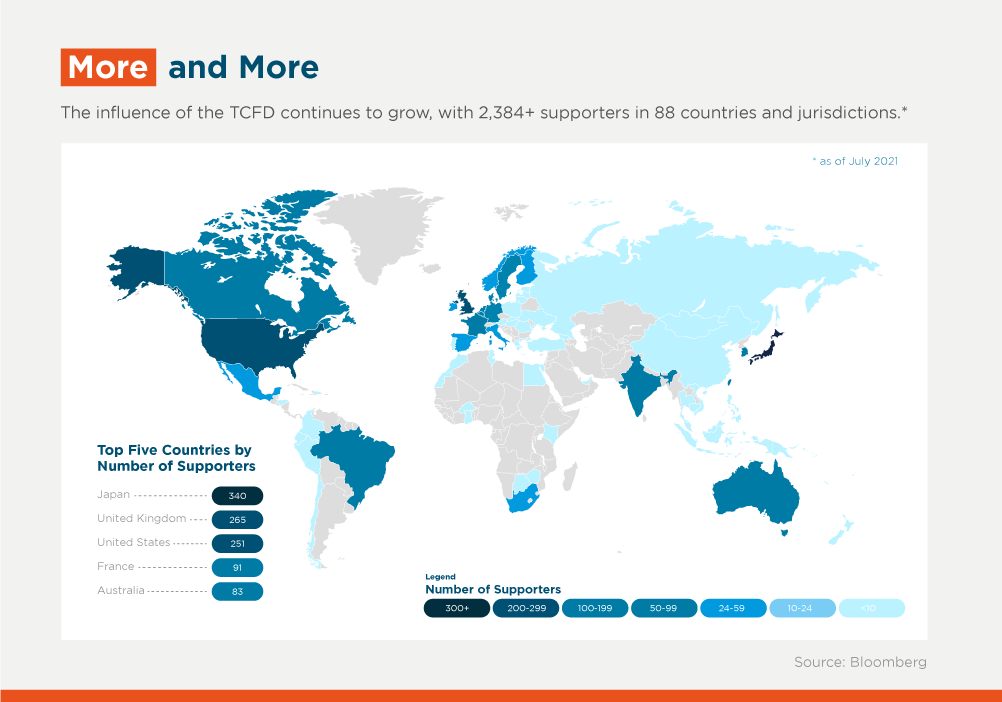
However, speed is of the essence here. In a globalized world, every region wants to present itself as sustainability-friendly, as the best possible recipient of sustainable-only funds. This is a large-scale competition, and we can’t run the risk to fall by the wayside. We must act now.
Multilateral lenders like IDB Invest can do a lot here. Many of LAC’s issues of sustainable bonds in recent years have been either structured or underwritten by IDB Invest, or both. We’re helping companies tap sustainability-driven financial markets, and also helping them join the push for more sustainable operations, for better reporting on their own initiatives and for better tracking of the actual effects of the policies implemented.
LAC is a massive reservoir of natural diversity and wealth, from the Amazon to the Andes to the Caribbean. It’s already key in supply chains in multiple industries including agribusinesses. If LAC can present itself as the world’s most sustainable region, more investments could flow and one of the most intractable problems that the region has had for ever – a lack of investment capital – will be fixed.
Doing the right thing here is doing the profitable thing. Now, how we do the right thing? We’ll discuss that in the second part of this post.
This blogpost is published in connection with IDB Invest Sustainability Week 2022, to be held between June 28 and July 1 in the city of Miami. Learn here how to register to participate, either in person or virtually.
Authors

Marisela Alvarenga
Marisela Alvarenga is a global financial leader with over two decades of experience spanning private banking, capital markets, and multilateral development institutions. Recognized for her strategic vision and execution, she has built a distinguished career driving sustainable finance, financial innovation, and growth across Latin America and the Caribbean (LAC). Currently serving as Managing Director and Chief of the Financial Sector Division at IDB Invest—the private sector arm of the Inter-American Development Bank (IDB) Group—Marisela shapes the institution’s strategic engagement with banks, fintechs, insurers, cooperatives and other financial actors across LAC. She plays a key role in positioning the financial sector as a catalyst for development, championing innovative financing structures and market-building initiatives that mobilize private capital at scale. Her leadership has helped mainstream green, social, and sustainable finance across the region, with a strong emphasis on deepening financial health, supporting women-led businesses, and advancing climate-resilient investments. Prior to joining the IDB Group, Marisela held senior leadership roles in corporate and investment banking at Citibank and Banco Cuscatlán, including Regional Director for Corporate Finance in Central America. In these roles, she led cross-border transactions and built regional platforms that strengthened access to finance for corporates and institutional clients. Marisela holds a Bachelor’s degree in Economics and Business Administration from the School of Economics and Business, and an MBA from the Pontifical Catholic University of Chile, complemented by executive studies at the Otto Beisheim School of Management (WHU) in Germany. She has also completed specialized programs in Impact Investing and Sustainable Finance from leading institutions in the United Kingdom. Fluent in the language of both markets and mission, Marisela is a sought-after voice on the intersection of finance, sustainability, and innovation. She is passionate about scaling solutions that advance financial health, climate resilience, and inclusive development in emerging markets.

Diego Flaiban
Diego leads the Financial Institutions Team for the Southern Cone at IDB Invest, which he joined in 2016. He is responsible for originating and structuring financing operations for financial intermediaries that have an impact on development. Diego has more than 15 years of experience in the IDB Group, where he has led transactions for loans, capital markets and capital investments in the region that promote access to finance, women’s empowerment and climate change mitigation. Before joining the IDB Group, he worked as Senior Consultant and Auditor of Financial Institutions at Arthur Andersen and Deloitte. He previously worked as a loan officer and financial specialist at leading financial institutions in Argentina. Diego earned a graduate certificate in international business from Georgetown University (USA) and an undergraduate degree in public accounting from Universidad de Buenos Aires (Argentina).
LIKE WHAT YOU JUST READ?
Subscribe to our mailing list to stay informed on the latest IDB Invest news, blog posts, upcoming events, and to learn more about specific areas of interest.
SubscribeWater and Sanitation
Related Posts
IDB Invest Structures the Largest Blue Bond in History: $1.35 Billion
The transaction supports the expansion of wastewater collection and treatment in the State of São Paulo and improves living conditions for 2.5 million people through an innovative financing solution.

Tailored Strategies to Provide Water and Sanitation to Brazil's 'Favelas'
When a new law allowed private capital to enter the sector, water and sanitation companies established programs that enabled them to work efficiently in vulnerable communities.

Leveraging the Private Sector to Unlock the Caribbean’s Most Precious Resource
The Caribbean’s reliance on oceans, often the biggest avenue of transportation and the main source of local employment, presents a clear economic opportunity, particularly for the private sector.