Is Bikesharing The Future of Latin America’s Cities?
Micromobility solutions, such as shared bikes and scooters, have gained significant traction in cities worldwide, with Latin America witnessing a surge in their adoption. These alternatives to car usage promise reduced emissions, reduced congestion, and decreased parking space demands in urban centers.


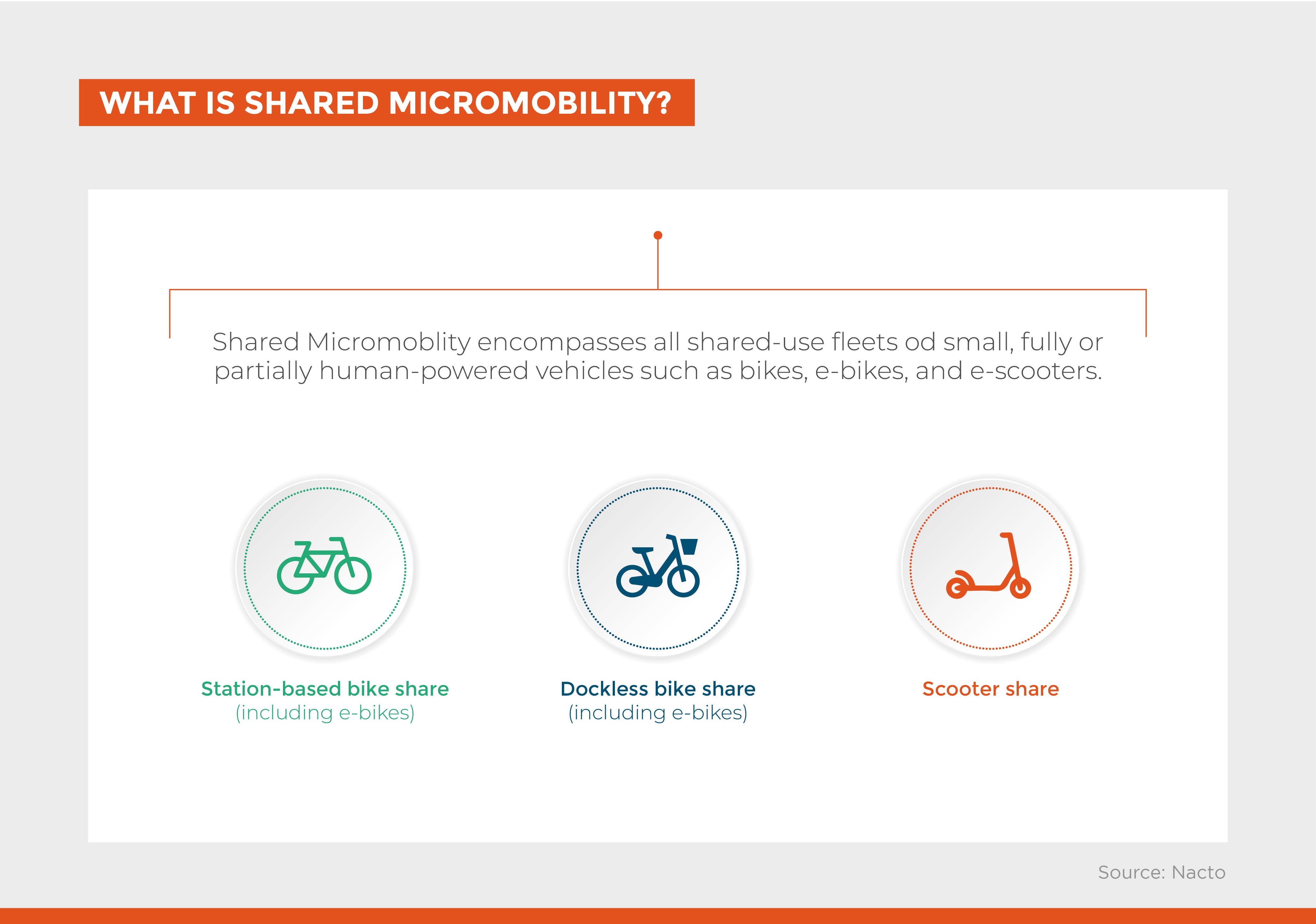
The success of micromobility companies hinges on critical capital expenditure investments and operational choices, such as whether to adopt docking systems (i.e., Tembici, Citibike, Divvy, Vélib) or embrace dockless models (i.e., Lime, Mobike and Muvo).
Keep reading to learn more about the advantages of both operational systems and our rationale for our recent investment, together with the Finland-LAC Blended Finance Climate Fund, in Tembici, Latin America’s leading provider of docked bikeshare services.
Docked Systems: An Anchored Approach
Docked micromobility systems operate on a straightforward principle: users pick up and return bikes or scooters at designated docking stations. Key advantages of this approach include:
- Centralized Maintenance: Docked systems facilitate a systematic route for centralized maintenance. Companies can efficiently service and repair vehicles at specific locations, ensuring optimal performance and safety.
- Reduced Theft and Damage: By securing bikes in docking stations, the risk of theft and vandalism decreases significantly. This stability contributes to longer bike lifespans.
- Safe Circulation: Docked systems lead to organized bike parking, promoting safety for riders and pedestrians alike, minimizing bikes left on streets or sidewalks.
Dockless Systems: Freedom of Movement
Dockless micromobility systems are more flexible for the users, allowing them to pick up and drop off vehicles anywhere within a designated service area. Dockless systems offer the following key advantages:
- User Convenience: Dockless systems eliminate the need to locate specific docking stations, allowing riders to start and end their trips within the service area, promoting ease of use.
- Rapid Deployment: Unlike docked systems that require suitable locations, obtaining permits, and constructing docking stations, dockless systems offer a simpler and faster deployment.
- Lower Initial Cost: Eliminating docking stations implies a potentially more cost-effective model, with a less capital-intensive structure.
Recent Experiences of Docked versus Dockless Systems
The earliest bike-sharing systems operated with docked stations. However, as GPS technology and wireless internet connectivity advanced in urban areas, a new operational model emerged—dockless bikes. This model held promise for many investors, theoretically enabling easy mass deployment and constant digital monitoring to prevent theft and vandalism.
Despite the initial appeal, growing evidence shows significant challenges to the dockless’ model. China, the global leader in micromobility, serves as a cautionary tale. It experienced a massive deployment of low-quality, dockless bikes amid intense competition.
The randomly parked bicycles obstructed pedestrian crossings, thousands of bikes laid abandoned on the streets and numerous companies struggled for profitability. Operators of dockless micro-mobility services in Europe and North America face similar challenges.
In August 2023, Paris voted to ban dockless eScooters in a city-wide referendum. The majority of dockless micro-mobility companies grapple with profitability issues, due primarily to persistently high damages and logistical costs.
In response to these challenges, formerly dockless eScooter operators, such as Lyft, announced plans to partially integrate previously dockless eScooters into a docking system for both bikes and scooters. This strategic shift reflects the need for a more organized approach to address the dockless model's operational complexities and negative externalities.
Our Investment in Tembici, the region’s leader in docked bike sharing
A pioneer of the docked bike-sharing model in Latin America is Tembici. Unlike its competitors, Tembici embraced the docked operational model from the start, securing the bikes and facilitating their maintenance, among other advantages.
Tembici demonstrates efficiency in minimizing financial losses from damaged and stolen bikes, along with industry-leading bike utilization rates. Recently, the company introduced an advanced docking station that charges Tembici’s new smart ebikes on-site, eliminating the need to have a full-time logistics and maintenance team swapping and charging batteries.
This systematic solution also allows to reduce greenhouse gas emissions. In contrast, maintenance teams in dockless systems often travel longer distances to locate and repair bikes, resulting in higher emissions. Recent research highlights the need to reduce the carbon footprint associated with repairing and charging (e)bikes and scooters. The company is also successively electrifying its maintenance vehicles and has replaced all its motorcycles in Brazil with electric ones.
Additionally, Tembici is the first micromobility company in the world to issue carbon credits. It also plans to automate the process through a digital issuance system for credits, supported by IDB Invest with technical assistance.
With this mixture of innovation, accessible urban mobility solutions, and sustainability, it is not difficult to assume that Tembici's example will spread, and bikesharing could soon become an essential to the future of Latin American cities.
Authors

Nikolai Orgland
Nikolai Orgland is a Blended Finance Investment Officer in the Financial Products and Services Division at IDB Invest. He specializes in designing innovative financial solutions to support catalytic private sector projects with the potential to achieve impactful outcomes in climate mitigation and adaptation. Prior to joining IDB Invest, Nikolai worked as an energy finance consultant at the World Bank’s global energy practice and the International Energy Agency’s clean energy innovation unit. In 2021-22, he was a fellow of the Mercator Fellowship for International Affairs. An engineer by training, Nikolai holds a Master of Science in Energy Management & Sustainability, as well as a Bachelor of Science in Environmental Engineering, both obtained from the Ecole Polytechnique Féderale de Lausanne in Switzerland.

Mónica Salazar
Mónica is an Investment Management Officer in the Equity & Mezzanine Finance Team at IDB Invest, which she joined in 2017. She is responsible of sourcing, selecting, originating, structuring, closing and supporting the supervision of the equity and mezzanine transactions (including venture capital), across all sectors of IDB Invest. Before joining the IDB Group, she worked as an Investment Analyst in the Private Equity Division of the Development Bank of Latin America (CAF, in Spanish), performing financial analysis and portfolio valuations of direct investments and private equity funds (approx. $600 million of AUM). She also has experience in project assessment in the financial and energy sectors in Venezuela. Mónica earned a master’s degree in Economic Development and Growth from Universidad Carlos III de Madrid (Spain) and has an undergraduate degree in Business Economics from Universidad Metropolitana, in Caracas (Venezuela).

Elee Muslin
Elee is a Lead Investment Officer, Blended Finance in the Financial Products and Services Division at IDB Invest which he joined in 2016. Elee is responsible for originating and structuring blended finance investments into high impact projects with a particular focus on infrastructure and energy. He has also structured and/or managed some of IDB Invest’s largest bilateral climate funds. Prior to joining IDB Group, Elee held various leadership roles at the Clinton Climate Initiative (CCI) of the William J. Clinton Foundation, including global business development and advisory engagements for and with the C40 Cities, the US Green Building Council, and the Midwest Governors Association. He earlier worked as a proprietary bulk commodities and chemicals trader in New York. He holds an MBA from the Tuck School of Business at Dartmouth College, an M.A. in Energy and Economics from the School of Advanced International Studies (SAIS) at Johns Hopkins, and a B.A. in International Relations from Brown University.

Gonzalo Arauz
Gonzalo Arauz is an investment expert in telecommunications, media and technology (TMT). He is a lead investment officer of IDB Invest, based in Buenos Aires, since 2017. He has extensive experience in the origination, structuring and management of complex debt and capital transactions in Latin America and the Caribbean. Before joining IDB Invest, he was an investment officer at the IFC (World Bank) serving the TMT and infrastructure sectors. Arauz has an engineering degree from Instituto Tecnológico de Buenos Aires and an MBA from Wharton School.
LIKE WHAT YOU JUST READ?
Subscribe to our mailing list to stay informed on the latest IDB Invest news, blog posts, upcoming events, and to learn more about specific areas of interest.
SubscribeClimate change
Related Posts

2024, the Year the World Turned Its Eyes to the Amazon Region
The "lungs of the planet," was one of the major topics of the past twelve months. Despite significant challenges, the region has much to offer regarding global solutions that drive sustainable development. Here is a selection of blogs we published on the topic.

Addressing Climate Change Through Improved Business Continuity
The increasing impact of climate change on the Caribbean, emphasizes the need for effective business continuity management to mitigate disruptions.

Assessing Climate Risks Is Vital for Companies, the Economy and the Environment
Although each company’s adaptation strategies must be tailored to its unique circumstances, ignoring climate change is never wise. Conducting a professional assessment is the best approach to making informed decisions.