
Digital Transformation Redefines Agricultural Competitiveness in Latin America and the Caribbean
Every time an agricultural company determines when to irrigate, selects what inputs to apply, or decides how to market or transport its production, the use of data and technological solutions becomes a key competitive advantage.

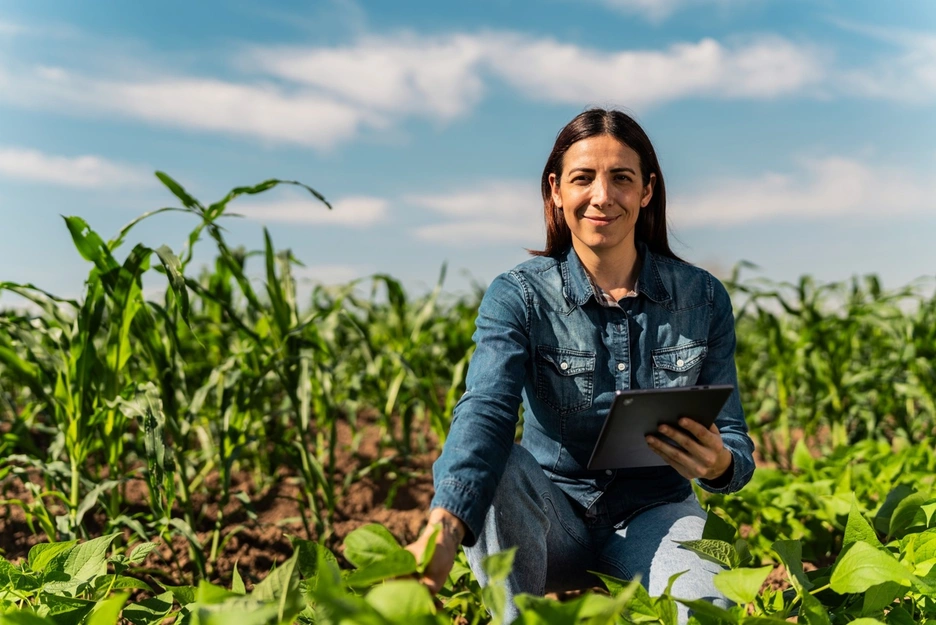
Technological solutions such as smart irrigation, end-to-end traceability, field sensors, and satellite or drone image analysis are already accessible to agribusinesses in the region, and their implementation generates measurable benefits from the very first production cycle.
The agribusiness sector faces growing challenges, ranging from food insecurity and price volatility to extreme weather events and tightening regulatory frameworks. Within this context, technological tools offer practical solutions to minimize waste, streamline processes, and elevate the quality of marketed products.
Yet the journey toward digital transformation is far from automatic. The sector faces persistent internal obstacles, including a lack of cohesive strategic vision, budgetary constraints, outdated technological systems, and a shortage of specialized talent. These internal issues are further exacerbated by external barriers, such as low connectivity in rural areas and a highly fragmented ecosystem for innovation.
Smart Use of Data to Improve Decision-Making
When technological solutions are integrated into a company's core operations, they transform the way leadership and management are exercised. Companies shift toward data-driven decision-making, strengthening their strategy and enabling greater operational efficiency, sharper focus, and a long-term perspective.
As companies incorporate and rely on contextualized information, their tactical decisions and operations become more sophisticated: irrigation schedules are optimized, inputs are more precise, logistics are organized with increased accuracy, and environmental performance is systematically documented.
The result is a comprehensive improvement reflected in higher productivity, better operational efficiency, reduced risks, and the leveraging of synergies throughout the value chain. Product quality is also enhanced, and adherence to sustainability standards is reinforced, allowing for the optimization of scarce resources, such as land, water, and energy.
IDB Invest and the Digital Transformation Hub for Agribusiness
IDB Invest serves as a catalyst for the rapid, measurable, and scalable adoption of technology. By combining specialized advisory services in digital transformation with tailored financial alternatives, IDB Invest facilitates the conversion of digital solution proof-of-concepts into corporate-scale technology programs.
Within this framework, IDB Invest has launched the Digital Transformation Hub for Agribusiness, a collaborative platform designed to support companies throughout their digital journeys.
The Hub provides end-to-end assistance, diagnoses and prioritizes use cases, and aligns technological supply with real demand. It also promotes proof-of-concepts with simple, actionable metrics, and manages organizational change to ensure scalable deployment. This is complemented by financing instruments that reduce risks and implementation times.
Innovation in Progress with Artificial Intelligence
Artificial intelligence (AI) is emerging as a key ally in improving efficiency and advancing toward more sustainable agriculture. In Latin America and the Caribbean, successful cases are already demonstrating AI’s real impact. For example, Kilimo, a company that uses big data and machine learning to optimize irrigation. Its algorithms analyze variables such as weather conditions and soil moisture to provide recommendations on when and how much to irrigate, how to conserve water, and stabilize yields through more efficient natural resource management.
AI is being deployed to address other critical challenges in agriculture. Advanced image tools facilitate early pest detection and crop yield estimation, which contribute to operational consistency and verifiable traceability, with a direct impact on costs and reduced pressure on ecosystems.
Competitiveness and Sustainability with a Forward-Looking Vision
Digital transformation has become the new “infrastructure” of the agribusiness sector in the region: it streamlines decision-making, modernizes operations, and transforms sustainability into a tangible economic advantage.
With the launch of the Digital Transformation Hub for Agribusiness and backed by IDB Invest’s advisory and financing capabilities, the private sector now has a practical roadmap. This pathway will help companies to modernize, scale up, and compete more effectively, both today and in the decade ahead, guided by a shared business vision centered on productivity, efficiency, and sustainability.
Authors

David Brogeras
David leads the Digital Transformation Advisory Services team at IDB Invest, which he joined in 2021. His role involves developing advisory and knowledge services that address the challenges of digital transformation in the private sector, and its impact on sustainability, through the incorporation of technological solutions supported by platforms, data analytics, and artificial intelligence. Throughout his career, David has been a partner at two of the world's leading consulting companies, specializing in digital transformation. Additionally, he is an entrepreneur and co-founder of two technology companies. David holds a Bachelor's degree in Physical Sciences from the Universidad Autónoma de Madrid. He has experience in navigating changing and complex business environments in Europe and Latin America, consistently achieving notable team objectives.

Carlos Narváez
Carlos Narváez is the lead agribusiness investment officer at IDB Invest. He is a specialist in structuring financial solutions, sustainability and impact. He has professional experience in the development and execution of high-profile agribusiness deals in countries such as Mexico, Argentina, Brazil, Colombia, Ecuador, Peru, Bolivia, and Venezuela. In addition to his experience at the IDB group, Carlos worked at CAF, Banco Santander, and BBVA in various project finance and investment banking positions. He holds a master's degree in finance from IESA and a degree in economics from Universidad Central de Venezuela.
LIKE WHAT YOU JUST READ?
Subscribe to our mailing list to stay informed on the latest IDB Invest news, blog posts, upcoming events, and to learn more about specific areas of interest.
SubscribeDevelopment Impact
Related Posts

Supporting Argentine SMEs: Financing for Working Capital and Investment
IDB Invest is helping strengthen Argentina's private sector through long-term financing and reverse factoring solutions that improve small and medium-sized enterprises' access to liquidity.

Three Takeaways From our 2026 Impact Report
Learn how IDB Invest's portfolio is performing on development impact.

WE Finance Code Colombia: Data and Partnerships to Expand Financing for Women-Led Businesses
Financial sector stakeholders across Colombia are joining forces to expand women entrepreneurs’ access to credit through data, collaboration, and financial solutions tailored to their needs.