
Sustainable BusinessRecent posts
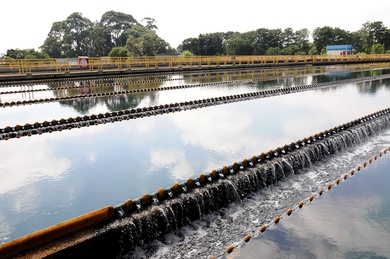
IDB Invest Structures the Largest Blue Bond in History: $1.35 Billion
The transaction supports the expansion of wastewater collection and treatment in the State of São Paulo and improves living conditions for 2.5 million people through an innovative financing solution.

Governance and Succession: Securing the Future of Mexico’s Nonbank Financial Institutions
IDB Invest study: key findings and a roadmap to strengthen governance and CEO and senior management succession planning in nonbank financial institutions (NBFIs).

Korea's Cutting-Edge Innovations to Transform Agribusiness in Latin America and the Caribbean
Discover how IDB Invest connects regional agribusinesses with leading innovators in Korea to accelerate smart agriculture, agritech, and sustainable growth.
Four insights for banks willing to seize sustainable finance opportunities
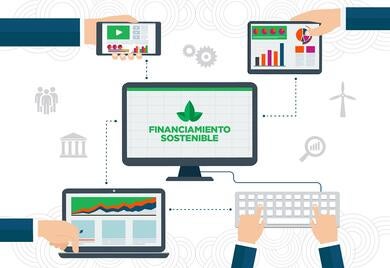
Attitudes towards environmental, social and governance factors are changing across the investment and lending community in Latin America and the Caribbean. Financial impacts associated with extreme weather events, growing regulatory and industry pressures on climate-related risk disclosure, and enhanced availability of data, are key aspects influencing companies’ views of environmental, climate, social and governance (ESG) factors. As a result, the role of ESG analysis is shifting from an ancillary function to an integral part of fundamental analysis and new business propositions. IDB Invest’s annual Sustainability Week (Lima, Peru – May 7-9, 2018) took a pulse on this shift, exploring wider sectoral trends within agribusiness, infrastructure, and banking sectors. For the financial community, in particular, there were four key messages from Sustainability Week:

All-inclusive hotels: A key for Latin America and the Caribbean’s growth
The traditional all-inclusive concept has significantly evolved in recent years to better adapt to changing consumer preferences, demographics and booking patterns. Guest behavior and expectations are being reshaped by a shift in consumers’ mindset towards travel and the disruptive impact of technology. Travelers are increasingly seeking personalization and authenticity in their vacation experiences, more involvement and connection with the local community, and a genuine engagement in environmentally responsible practices—all of this while maintaining full control of their choices and increasingly relying on mobile and electronic devices as a preferred booking method. A revamped all-inclusive 2.0 model is becoming more sensitive to these consumer needs and undergoing an exciting metamorphosis.
How to achieve women’s financial inclusion: The role of financial intermediaries and strong sex-disaggregated data
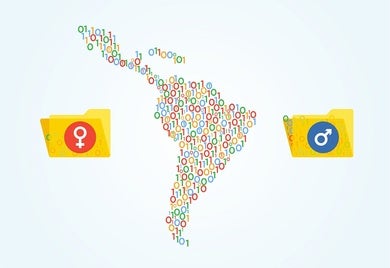
In light of the number of initiatives developed in Latin America and the Caribbean to help increase the availability and use of sex-disaggregated demand-side (customer) and supply-side (institution) data across the ecosystem, you may think we’ve moved on from asking financial intermediaries: “How big is the women’s market opportunity in Latin America and the Caribbean?” to “Did the women’s market initiative perform as expected”? We have not.

Transparency is good for business
One out of three Latin Americans acknowledges having paid at least one bribe in exchange for some type of benefit related to public services. In tandem with this, major corruption scandals have come to light in recent years, affecting both governments and private companies. Small and large-scale corruption and lack of transparency are present at the individual, government, and business level and adversely impact countries’ productivity and economic growth.

Sustainable Finance: What can the financial sector do to better manage environmental and social risks?
In January 2018, Larry Fink, the CEO of BlackRock published an open letter to the CEOs of publicly traded companies. His message was clear, companies have a responsibility to deliver profit, and make “a positive contribution to society.” Failure to do the latter comes at the risk of losing its license to operate. Consumers can influence through decisions to purchase products from companies that value broader corporate goals of environmental impact, workforce diversity, and community engagement. What may come as a surprise statement from a private equity fund with $6 trillion under management is increasingly the de facto market standard.

Wildlife corridors: Saving lives, biodiversity and money
Latin America and the Caribbean count for 40% of the world’s biodiversity. However, the region has lost a big part of its natural capital during the past decades. For that reason, the IDB, in partnership with the Global Environmental Fund (GEF), recognizes the importance of taking action to support countries and private sector companies in the region to manage their natural resources to generate economic growth.
