
IDB Invest Structures the Largest Blue Bond in History: $1.35 Billion
The transaction supports the expansion of wastewater collection and treatment in the State of São Paulo and improves living conditions for 2.5 million people through an innovative financing solution.

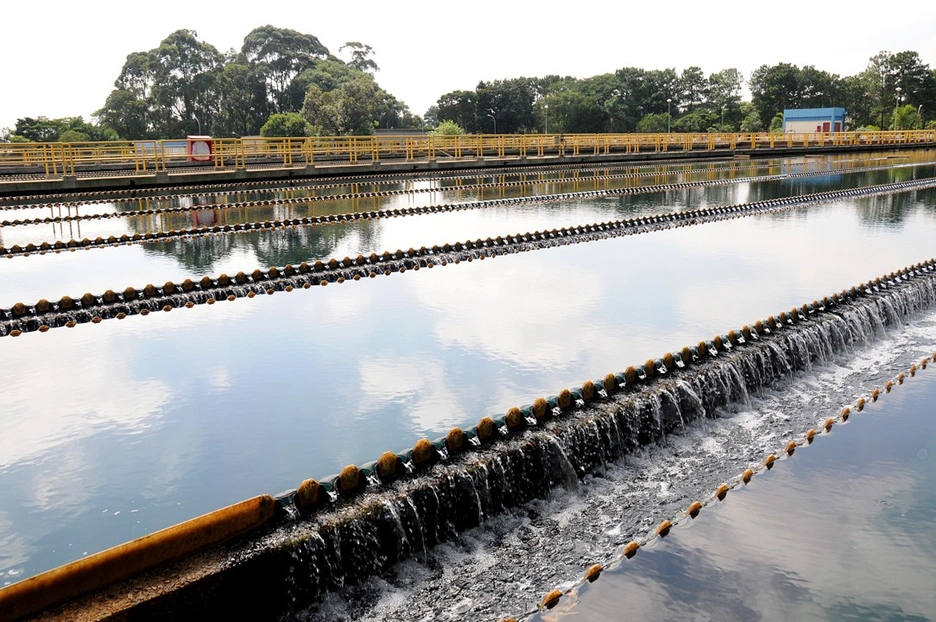
The State of São Paulo is on track to achieve universal sanitation in 2029. In this effort, IDB Invest played a critical role by designing an innovative financing model that enabled the Companhia de Saneamento Básico do Estado de São Paulo (SABESP) to issue a record-breaking $1.35 billion blue bond to expand wastewater collection networks and treatment infrastructure across the state.
We achieved this by leveraging our extensive experience in Brazil’s water sector, working closely with SABESP, and applying lessons learned from structuring A/B bonds and thematic bonds across the region, expertise we introduced in Brazil for the first time.
SABESP operates in 375 municipalities in the state of São Paulo. It supplies water to 29.9 million people and sewage services to 27 million. Yet even with this extensive reach, 2.5 million people still lack access to sewage collection systems. In 2024, hospitals across the State of São Paulo recorded 46,594 cases of Diseases Related to Inadequate Environmental Sanitation.
In an effort to achieve universal sanitation, SABESP accelerated its investment plans in wastewater infrastructure and treatment facilities, aiming to increase sewage treatment coverage in São Paulo from 85% to 99% by 2029. But reaching this ambition requires more than operational capacity; it requires innovative financing to attract new investors and mobilize large‑scale, long‑term capital.
IDB Invest’s Catalytic Role in Mobilizing Financing for SABESP
IDB Invest’s "Originate-to-Share" model drove the SABESP transaction, leveraging its technical expertise to transform a critical sanitation project into a highly bankable opportunity tailored to global institutional investors’ requirements.
During origination, IDB Invest conducted rigorous due diligence and applied an existing thematic framework to enhance the transaction’s attractiveness. IDB Invest provided a part of the loan and "shared" the remaining investment with capital‑market investors to scale the financing.
A/B Bond Structure: How a Record-Breaking Blue Bond Mobilized Institutional Capital
Part A (The Anchor): IDB Invest provided a direct $200 million loan from its own balance sheet. This commitment served as a powerful sign of confidence to investors interested in the blue bond.
The thematic taxonomy provides the structure for a liquidity premium, mobilizing private credit specifically interested in sustainable investments, as seen in prior A/B social bonds in Colombia.
Part B (The Mobilization): Once offered to the private market, the Blue Bond mobilized $1.35 billion from global institutional investors. Under IDB Invest’s umbrella, investors benefit from immunities and privileges that increase the interest of both the company and investors.
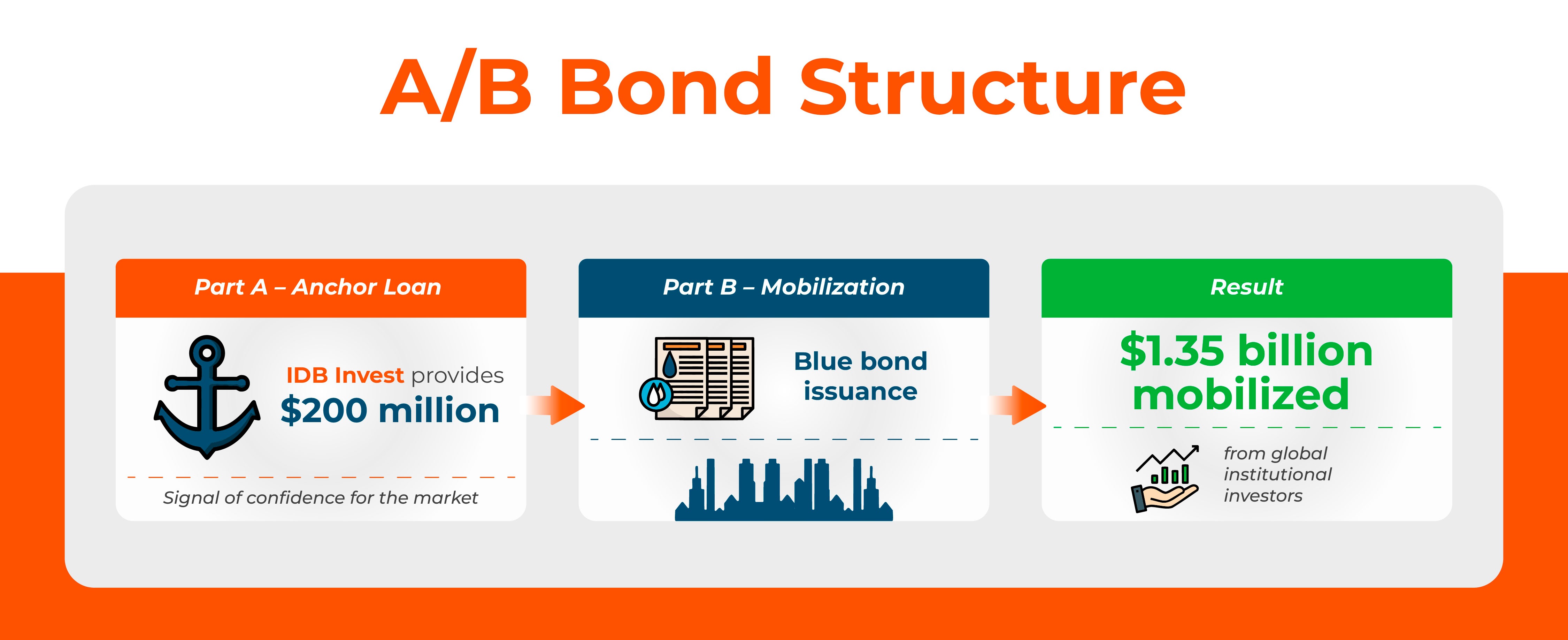
This historic transaction stands as the largest blue bond issuance to date. Given the scale of investment required to expand sewage services in São Paulo, the participation of international institutional investors was essential to diversify the company's funding sources.
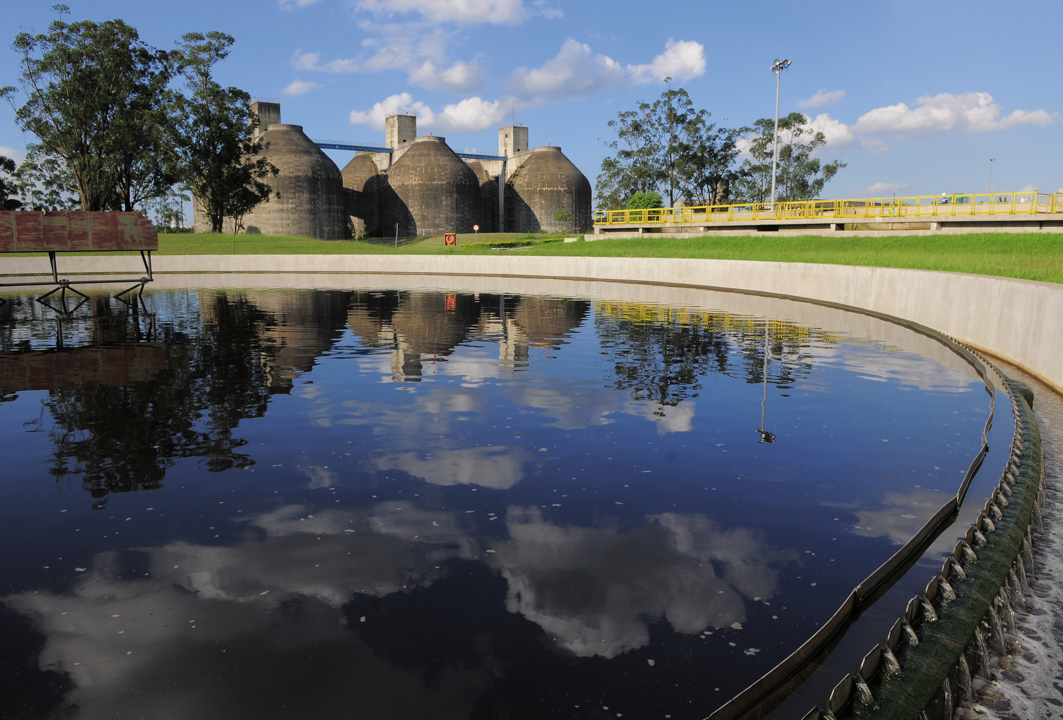
Courtesy: SABESP. Wastewater treatment facility operated by SABESP in the state of São Paulo, Brazil
Why do Institutional Investors Prefer Bonds Over Loans?
Many institutional mandates allow investments in tradable securities but restrict direct lending. As a result, the A Loan/B bond structure proved the most effective way to mobilize capital for SABESP. By converting the B‑portion into a tradable security – a blue bond – it enables participation by pension funds, insurers, and asset managers.
The Strategic Rationale Behind Issuance of a Blue Bond
After confirming strong market demand, IDB Invest structured a loan to serve as the umbrella for the bond issuance. The bond, labeled blue, leverages SABESP’s efforts to reduce wastewater pollution in São Paulo’s rivers, an objective fully aligned with the environmental criteria required for this type of instrument.
Blue bonds are particularly attractive to institutional investors with mandates that seek long-term returns while ensuring their capital supports the responsible management of freshwater and ocean resources.
How IDB Invest Strengthens Investor Protection
In this A/B bond financing model, IDB Invest acts as the Lender of Record for the entire financial package and is responsible for collecting payments, distributing funds, and monitoring and supervising the project to ensure it stays on track. It gives the investor confidence in the project’s risk management and long‑term sustainability.
Additionally, as a Lender of Record, IDB Invest automatically extends its Preferred Creditor Status (PCS) to B‑bond holders, providing them with an added layer of protection against transfer, convertibility, and certain sovereign risks.
A Blueprint for Sustainable Growth
SABESP’s blue bond issuance highlights the surging appetite for sustainable investment across Latin America and the Caribbean. It shows that institutional investors are ready to commit large‑scale capital when projects are financially well-designed and grounded in transparent, auditable, and measurable objectives.
IDB Invest strengthens this confidence by originating projects directly, bringing its regional expertise to navigate complex legal and regulatory environments and applying disciplined processes that help de‑risk infrastructure.
IDB Invest's innovative financing structure, designed to connect 2.5 million people to sewage systems in São Paulo, serves as a replicable blueprint for de-risking and unlocking institutional capital at scale, a critical need as the region seeks to mobilize $372 billion to universalize water and sanitation by 2030.
SABESP’s historic blue bond issuance reinforces this pathway, showing how well‑structured, high‑impact transactions can channel global capital toward the communities that need life‑changing infrastructure the most.
Related Content
Authors

Gabriela Cavichioli
Gabriela is an investment officer in the Infrastructure and Energy Division at IDB Invest, based in São Paulo, Brazil. She has over ten years of experience in project and structured finance, specializing in infrastructure and energy projects, with a strong focus on water and sanitation, renewable energy, and social infrastructure in Brazil. Prior to joining IDB Invest in 2021, she served as an associate director in the Global Infrastructure Group credit analysis team at Fitch Ratings. Earlier in her career, she spent several years at Banco Santander Brasil, working in the Project and Structured Finance Division. Gabriela holds a bachelor’s degree in business administration from Escola Superior de Propaganda e Marketing (ESPM) and an MBA in corporate treasury from the University of São Paulo (USP). She is also a Certified Treasury Professional (CTP).
LIKE WHAT YOU JUST READ?
Subscribe to our mailing list to stay informed on the latest IDB Invest news, blog posts, upcoming events, and to learn more about specific areas of interest.
SubscribeClimate change
Related Posts

2024, the Year the World Turned Its Eyes to the Amazon Region
The "lungs of the planet," was one of the major topics of the past twelve months. Despite significant challenges, the region has much to offer regarding global solutions that drive sustainable development. Here is a selection of blogs we published on the topic.

Addressing Climate Change Through Improved Business Continuity
The increasing impact of climate change on the Caribbean, emphasizes the need for effective business continuity management to mitigate disruptions.

Assessing Climate Risks Is Vital for Companies, the Economy and the Environment
Although each company’s adaptation strategies must be tailored to its unique circumstances, ignoring climate change is never wise. Conducting a professional assessment is the best approach to making informed decisions.