
How to achieve women’s financial inclusion: The role of financial intermediaries and strong sex-disaggregated data
In light of the number of initiatives developed in Latin America and the Caribbean to help increase the availability and use of sex-disaggregated demand-side (customer) and supply-side (institution) data across the ecosystem, you may think we’ve moved on from asking financial intermediaries: “How big is the women’s market opportunity in Latin America and the Caribbean?” to “Did the women’s market initiative perform as expected”? We have not.

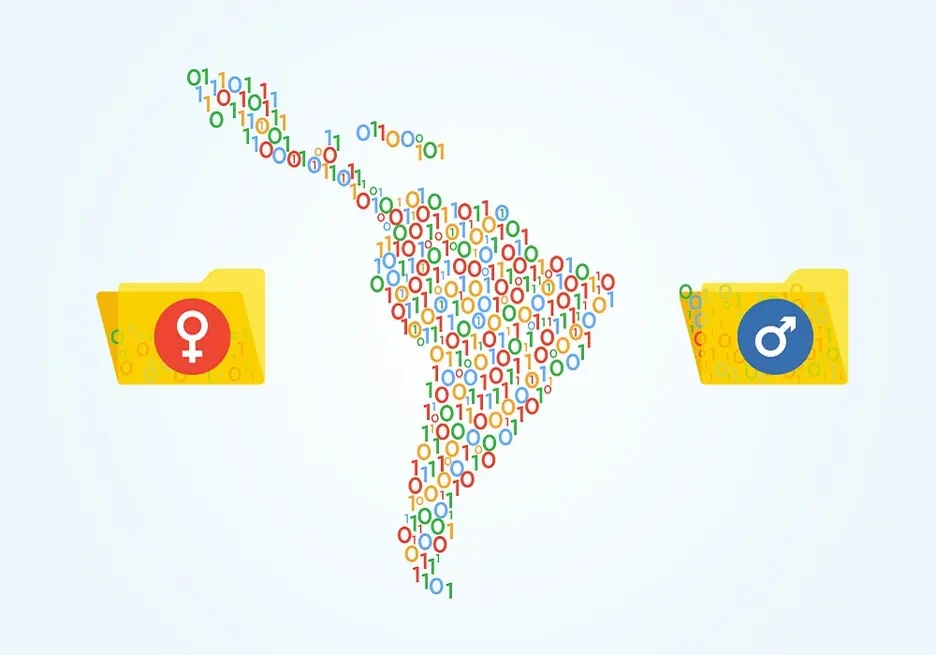
Women remain an untapped market opportunity for financial service providers in Latin America and the Caribbean and are six percentage points less likely than men to have a bank account in the region, according to the Global Financial Inclusion Database. Many countries in the region do not have the data that allow accurate sizing of the women’s market, for example, the number of women-owned/led small and medium-sized enterprises (SMEs). For those who do, many financial intermediaries within these countries are neither looking at their own portfolios to understand how many women they are serving nor are they using that data to take action on closing the gaps in women’s financial inclusion. They are all losing an opportunity to better understand their market performance, develop strategies to increase their market share, reduce income inequality and promote economic growth.
For these reasons, IDB Invest joined the Women’s Financial Inclusion Data (WFID) partnership to help determine where Latin American and the Caribbean financial intermediaries are on the path to full financial inclusion for women and to identify and prioritize key areas where data can support decision making. These institutions need an accurate picture of the women’s market to estimate its potential, develop a business case and monitor their performance as they target women.
Where should financial intermediaries start to have the most impact?
Which data present the greatest opportunity for impact on women’s financial inclusion? Which data already exist? What types of new data are needed? The WFID partnership answers these questions in the policy brief it launched on April 20th, 2018.
The WFID findings show the most limited data area for financial intermediaries is the business case. Financial intermediaries need more information on internal financial return (customer uptake, attrition, revenue, profit), impact on customers (loyalty, customer satisfaction, branding and net promoter scores), and the investment required if we want them to be able to understand the business opportunity and take actions that lead to greater financial inclusion for women.
Without collecting sex-disaggregated supply-side data, including top-level portfolio data as well as more detailed revenue and profit analysis, Latin America and the Caribbean financial intermediaries cannot design, implement and measure women’s market programs. This requires a focus on three main areas:
- Data availability, by ensuring systems are tagging clients by sex.
- Data quality, by carefully determining who has control over an account, identifying women business owners that may be in their consumer portfolio, using management information systems with flexible functionality, and creating customer relationship management systems that link product data to customer demographic data by sex etc.
- Data use, by deploying strong statistical capabilities in gathering, cleaning, verifying, and analyzing data.
If financial intermediaries start by collecting and analyzing their own portfolio data they will be able to develop strong business cases internally that can drive strategic decisions to achieve full women’s financial inclusion. A solid data foundation will then allow financial intermediaries to measure performance results later, bringing the gap from “How big is the women’s market opportunity in Latin America and the Caribbean?” to “Did the women’s market initiative perform as expected”?
Authors

Lauren Murphy
Lauren Murphy es oficial de inversiones en servicios de asesoramiento para BID Invest y se especializa en igualdad de género. Lauren tiene una exper
LIKE WHAT YOU JUST READ?
Subscribe to our mailing list to stay informed on the latest IDB Invest news, blog posts, upcoming events, and to learn more about specific areas of interest.
SubscribeTransport
Related Posts

Xochi, a Path of Flowers to Alleviate Traffic Woes in Guatemala
In a country where gridlocks are a part of daily life, a private toll road built to international standards drastically reduces travel time, empowers local communities, and innovates in more than one way for a project of its kind.
Next Stop for Electric Buses: What Do We Do with the Batteries?
This type of vehicle is becoming a key option compared to diesel to reduce emissions in public transport. The challenge, however, is to find effective ways to extend the life of the batteries and recycle their components.

Is Bikesharing The Future of Latin America’s Cities?
Micromobility solutions, such as shared bikes and scooters, have gained significant traction in cities worldwide, with Latin America witnessing a surge in their adoption. These alternatives to car usage promise reduced emissions, reduced congestion, and decreased parking space demands in urban centers.