
How Fintech Can Help Nanks Tackle Deforestation
Big data and geospatial technology are making it easier for banks to decrease risk when financing projects with potential environmental impacts. How? Our guest author, Luiz Amaral, Global Manager of WRI’s Global Forest Watch Commodities has the answer.

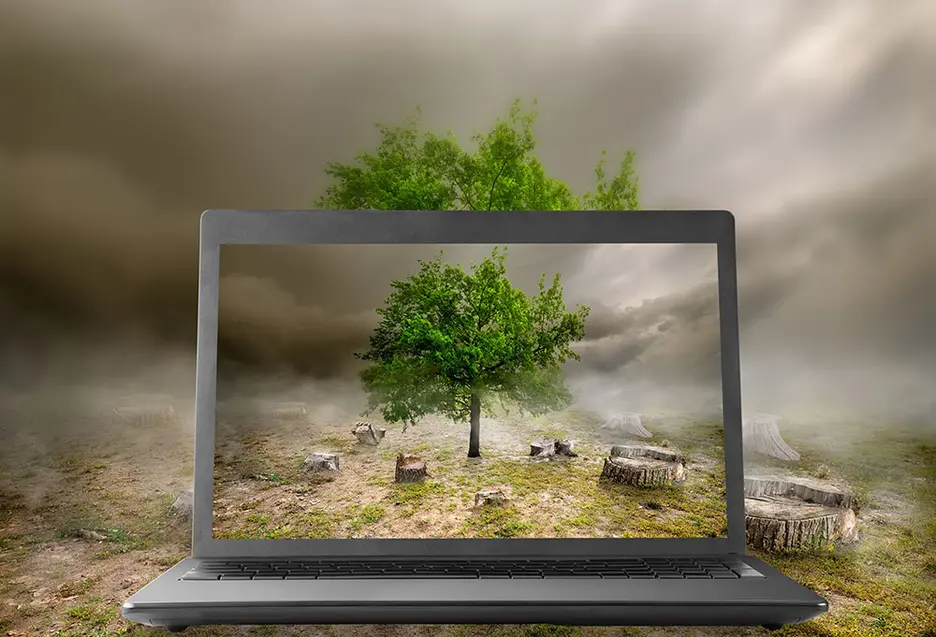
Banks are in the business of managing risk. Loan money to a bad payer and you may suffer big financial losses. Let laundered or illicit money pass through your bank and you could incur fines and regulatory punishments. The success of banking and financial institutions depends on the quality, availability and efficiency of cost benefit analyses to accurately assess risk. It’s at the core of how they operate, and it’s what makes them primed to tackle the environmental and deforestation risks in their businesses.
Three ways damaging the environment can damage business
Financiers are increasingly looking at deforestation and other environmental impacts as risk factors when making their investment decisions. This is especially important in Paraguay, where banks often invest in the agriculture sector—a major driver of the country’s deforestation. More institutions are coming to understand that funding environmentally damaging projects carry risk in three areas:
1. Legal
Many countries have environmental regulations. For example, the Central Bank of Brazil requires banks to have social-environmental policies and due diligence processes in place and prohibits loans to projects in areas which were illegally deforested in the Amazon. Last year, a commercial bank was fined $15.3 million (R$ 47.5 million) for allegedly failing to comply with this law.
2. Financial
Contributing to environmental damage can impact bottom lines. If a financial institution loans money to a client with questionable environmental practices, that client may be vulnerable to lawsuits or fines that could jeopardize their ability to pay back those loans.
3. Reputational
As consumers and investors become more environmentally conscious, banks can suffer reputational damage and lose clients if they are connected to unsustainable activities.
With momentum building among governments and private industry to address deforestation, the finance sector can’t afford to be left behind. Some institutions are getting on board, but not all have incorporated sustainability strategies into their core business models. Unless banks make environmental risk assessments part of their decision-making process, they could not only lose the clients they have but also miss out on new business opportunities.
Big data and satellites support greener investments
Advances in technology and data have made it easier to join the cause. Before, banks would have to conduct site visits to analyze the environmental impact of an investment. Though good for face-to-face engagement, this approach can be expensive and difficult to scale. Now, big data and geospatial technology has made deforestation monitoring cheaper, more accessible and closer to real-time to keep up with the pace of the investment sector.
Tools like Global Forest Watch (GFW) can detect whether an area of trees as small as 30 meters (the size of a soccer penalty box) was lost anywhere in the world. You can also see how many fires burned on a farm or concession and how far it was from protected areas on any given day. This is all made possible with super computers that automatically analyze petabytes of satellite imagery in near real-time.
This technology will soon be customized and made widely available for banks looking to streamline their environmental risk assessments. World Resources Institute (WRI), in partnership with major traders, retailers, food processors, financial institutions and NGOs, has been developing a new system called GFW PRO. This new platform will allow banks to locate their clients’ production mills or farms and track deforestation and fire alerts in investment areas through a dashboard as easily as checking a balance sheet. All a user needs is the geographic location of where an investment is located, such as the address of a silo or the shapefile of a farm—information that most banks already have.
GFW PRO will incorporate project-based sustainability analysis and portfolio-level evaluations and trends, while keeping proprietary information secure. Through this new approach, banks will be able to integrate forest monitoring into their core business strategy the same way they track other variables—like stock markets, harvest numbers, exchange rates or governmental based interest rates—that can impact the risk of their agriculture-related businesses.
There’s mounting will across the spectrum—from consumers to governments to corporations—to tackle environmental risks and deforestation. But at the end of the day, money remains one of the most potent drivers of action. It is exciting to see the momentum among banks and finance institutions to join the sustainability effort as it will surely have major impacts on the future of the planet and strengthen their business.
[embed]https://vimeo.com/210650439[/embed]
This content was published originally by the Global Forest Watch blog.
Authors

Luiz Amaral
Luiz Amaral es gerente global de Global Forest Watch Commodities. Encabeza el equipo internacional que compromete a las empresas y los gobiernos a
LIKE WHAT YOU JUST READ?
Subscribe to our mailing list to stay informed on the latest IDB Invest news, blog posts, upcoming events, and to learn more about specific areas of interest.
SubscribeAgribusiness
Related Posts

Korea's Cutting-Edge Innovations to Transform Agribusiness in Latin America and the Caribbean
Discover how IDB Invest connects regional agribusinesses with leading innovators in Korea to accelerate smart agriculture, agritech, and sustainable growth.
Digital Transformation Redefines Agricultural Competitiveness in Latin America and the Caribbean
Every time an agricultural company determines when to irrigate, selects what inputs to apply, or decides how to market or transport its production, the use of data and technological solutions becomes a key competitive advantage.
Combating Multidimensional Poverty from the Private Sector Requires Much More Than Jobs
For Danper, a leading Peruvian company in the global agri-food sector, understanding the living conditions of its workers and their families is fundamental to strengthening actions to improve their quality of life.