
The Future of the Amazon Region Demands Innovative and Sustainable Financing
During an event at New York Climate Week, participants highlighted the urgent need for cross-sector collaboration and collective action to promote bioeconomy, long-term solutions, and halt deforestation.


During New York Climate Week on September 27, we organized an event with the Science Panel for the Amazon (SPA) focused on climate financing for the restoration and sustainable development of the Amazon.
The event brought together eminent specialists to explore the interaction between climate financing, restoration efforts, and sustainable development in the Amazon basin.
This region is at a critical crossroads—a climate tipping point—while the world faces the challenges of climate change.
From SPA’s perspective, we emphasized the urgency of the issues and the need for collaboration. In IDB Invest’s intervention, we stressed the importance of unity in addressing the multifaceted challenges the Amazon region faces.
COP30 in Brazil
Ambassador André Correa do Lago, Secretary of Climate and Environment of the Ministry of Foreign Affairs of Brazil, framed the challenges of organizing COP30 (UN Climate Change Conference ) in his country.
He highlighted the urgency of addressing deforestation, Brazil's primary source of emissions, and emphasized that halting deforestation alone will not solve the global climate crisis.
The real challenge lies in addressing fossil fuel emissions. Despite this, Ambassador do Lago expressed optimism, citing the Declaration of Belém and the United for Our Forests initiative to unite 67 nations with tropical forests around shared interests.
A New Paradigm
Roxana Barrantes from the SPA presented key findings from the Policy Brief “A New Infrastructure for the Amazon.”
The document emphasizes the need for a new paradigm in Amazonian infrastructure that focuses on the needs of local populations while safeguarding the environment.
WATCH: Amazonia Finance Network
Discover the largest financial inclusion program in Latin America and our exciting expansion plans to drive sustainable development across the Amazon region. (Content in Portuguese. Use Settings/Subtitles/Auto-translate and choose your preferred language)
Ricardo Abramovay highlighted the untapped potential of the socio-bioeconomy in the Amazon and advocated for a focus on diversity in forest conservation and non-timber products.
Catarina Jakovac highlighted the alarming state of the Amazon forest, where around 20% of native forests have been deforested.
She advocated moving from "deforestation arcs" to "restoration arcs" through various strategies, including natural regeneration and active planting.
These efforts require the participation of local stakeholders and the promotion of the restoration supply and value chain.
Obstacles and Opportunities
Prominent experts such as Valmir Ortega, Marcelo Medeiros, Ilona Szabó, Hervé Duteil, and James Mulligan participated in the panel discussion.
Their diverse perspectives enriched the conversation, calling for innovative financial mechanisms that recognize the intrinsic value of nature.
Ilona Szabó addressed the obstacles and opportunities for Amazonian development, highlighting the need to restore degraded lands and reduce investment risks.
Related Content
- Calling Private Investors: Four Opportunities to Scale Impact in the Amazon Region
- IDB Invest Sustainability Week 2024
Valmir Ortega emphasized the need for tailored strategies to restore millions of hectares of degraded lands, highlighting the importance of public subsidies to promote sustainable practices.
Marcelo Medeiros shared an ambitious vision of restoring one million hectares of forest, highlighting the fundamental role of biodiversity and partnerships with local producers.
James Mulligan stressed that adequate solutions for the Amazon require innovation and a solid commitment to action, highlighting the importance of halting tropical deforestation and promoting large-scale restoration.
Hervé Duteil highlighted the need to shift the focus from scaling up to multiplying financial flows towards the Amazon to meet the region’s development needs.
He proposed using outcome bonds to transfer risk and advocated for a price on nature that goes beyond carbon and biodiversity credits.
Financial Innovation
The event concluded with a discussion on Amazon Bonds with the World Bank as a potential tool for restoration financing.
Innovative financial mechanisms, such as Amazon Bonds, bioeconomy investments, and results-based financing, were clearly called for.
JOIN A COMMUNITY OF 40,000 DEVELOPMENT LEADERS AND GET THE LATEST ON OUR PROJECTS AND KNOWLEDGE

The socio-bioeconomy was identified as key to sustainable development, promoting forest conservation and non-timber products.
Ensuring accountability in climate financing is crucial to achieving tangible results for communities and ecosystems.
As COP30 approaches, collaborative action, and cross-sector partnerships are essential to integrate these efforts into global climate strategies and ensure the future of the Amazon.
Authors

Jaime García Alba
Jaime Garcia Alba is the Director of Strategy and Amazonia Forever Coordinator at IDB Invest. Throughout his career at IDB Group, Jaime developed IDB Invest's new business model and the corresponding $3.5 billion capital raise and led the Advisory Services and Blended Finance Program. Previously, he served as head of sustainability reporting and private finance at the United Nations (UN) Global Compact, where he coordinated the private sector's participation in the negotiation of the Sustainable Development Goals and the Paris climate agreement.

Emma Torres
Emma Torres is vice-president for the Americas and Head of the New York office of the Sustainable Development Solutions Network. She serves as Strategic Coordinator of the Science Panel for the Amazon. The Panel composed of more than 250 scientists issued its first report on the State of the Amazon at COP 26 in November 2021. She also serves as Strategic Coordinator of the Science Panel for the Congo Basin and as Co-Chair of SDSN Amazonia. Between 2020 and 2022. Ms. Torres served on the Lancet COVID-19 Commission. Ms. Torres has a long working experience in the United Nations, with increasing levels of responsibilities involving management, strategic programme development and negotiations to promote sustainable development initiatives globally. She coordinated a strategic initiative "Latin America and the Caribbean: A Biodiversity SuperPower", which makes the case of biodiversity importance for development, equity and long-term competitiveness of the region. Ms. Torres served as Deputy Executive Coordinator, UNDP/GEF- a partnership among the UNDP, UNEP and the World Bank. She was responsible for managing a team of over 60 professionals and over $1Billion portfolio in more than 80 countries. As UNDP coordinator for the Commission on Development and Environment for Latin America and the Caribbean she produced “Our Own Agenda”, and “Amazonia without Myths”. Both remain a point of reference in the field. UNDP and the Inter-American Development Bank sponsored the Commission. Ms. Torres holds an MA, Economics, Universidad Complutense, Madrid, Spain; a Diploma on Language and French Civilization, Sorbonne, Paris; Certificates in Environmental Economics and Climate Change, IIED, Harvard University.
LIKE WHAT YOU JUST READ?
Subscribe to our mailing list to stay informed on the latest IDB Invest news, blog posts, upcoming events, and to learn more about specific areas of interest.
SubscribeFinancial Institutions
Related Posts

Governance and Succession: Securing the Future of Mexico’s Nonbank Financial Institutions
IDB Invest study: key findings and a roadmap to strengthen governance and CEO and senior management succession planning in nonbank financial institutions (NBFIs).
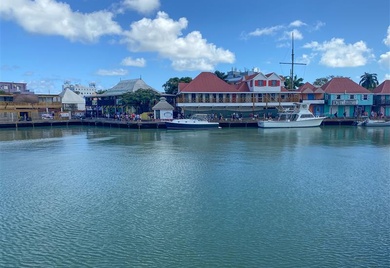
Facing the Storm: How IDB Invest Supports Caribbean Private Sector Resilience
IDB Invest is partnering with the Green Climate Fund to help Caribbean businesses better withstand future climate shocks through blended finance and technical assistance.

Reimagining the Future of Finance in Latin America and the Caribbean
At the FinnLAC Forum 2025 in Miami, the IDB Group hosted over 500 industry leaders and experts to help redefine the future of finance in Latin America and the Caribbean. The event focused on improving the ability of individuals and companies to better manage their finances, withstand economic shocks, and invest in their long-term prosperity. By highlighting innovations that broaden access, strengthen resilience, and promote overall financial health, the forum set the stage for more sustainable financial systems across the region.