
Sustainable BusinessRecent posts

Financial Health: Driving Growth in Latin America and the Caribbean
According to the latest Global Findex database, the proportion of adults in Latin America and the Caribbean (LAC) with account ownership rose from 39% in 2011 to over 75% in 2025. This increase was driven by the rise of digital-first financial service providers, expanded government transfers, and innovations that enhance the value proposition, such as the growth of e-commerce and instant payment systems in countries like Brazil, Peru, and Costa Rica.
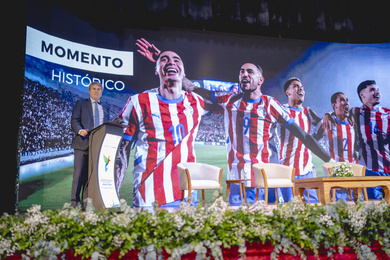
IDB Invest and the New Push for the Private Sector in Paraguay
Imagine investing in a portfolio of projects in a country with sustained economic growth, low inflation, abundant clean energy, and preferential access to a regional market of 270 million consumers. That country is Paraguay, where IDB Invest has committed to mobilizing up to $1 billion to support strategic private-sector projects that drive sustainable development.
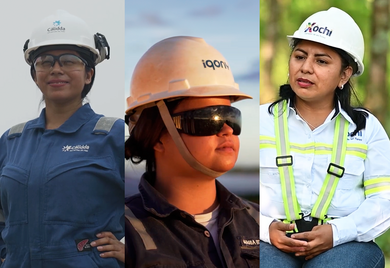
Energy and Transport Infrastructure: Projects Driving Jobs and Transforming Communities
IDB Invest works to boost job creation through the private sector and ensure these opportunities reach areas with the potential to develop new productive sectors and generate formal employment. Financing energy and transport infrastructure projects in Latin America and the Caribbean has been crucial for creating quality jobs and increasing women's workforce participation.
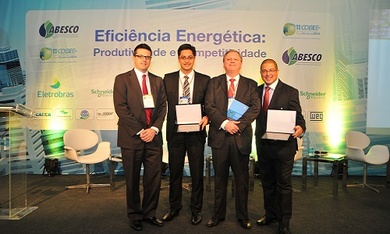
How can banks jump-start Brazil's energy efficiency market?
Last year, I traveled with a team of IDB private sector specialists to São Paulo. There we hosted, in partnership with the UNDP, two one-day trainings for commercial banks. The purpose was to introduce the characteristics of financing energy efficiency projects to relationship managers and credit risk officers of the participating financial institutions. We demonstrated through a dynamic process and real case studies how they could overcome the typical barriers to investment in energy efficiency projects.

How sustainable is your morning coffee? 3 Tips to Reduce its Impact
Coffee is cultivated in over 70 countries around the globe and it is considered one of the world's most valuable agricultural commodities. In the United States alone, the coffee industry is valued at an estimated $30 billion. But the question for both producers and consumers is: how sustainable is coffee?
How Sustainable Tourism in Jamaica Opened Doors for Youth
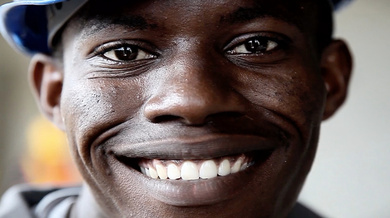
A Jamaican-born IDB investment officer shares his experience filming the story of youth at risk in his hometown of Kingston * By Stefan Wright If you had told me two years ago that my tourism project would lead me to be part of a team filming a video in a music studio, I wouldn’t have believed you. But that is precisely what happened, together with Jamoi, one of several young Jamaican men who had turned his life around with this project – a project which combined sustainable tourism in Jamaica and at-risk youth.

Counterintuitive ideas are the right answer for sustainable enterprises
Most business models are formulated by the top of the pyramid. Many business leaders and academics write on the must haves of a successful base of the pyramid (BOP) business model. Still quite a few of those business endeavors fail. While reasons for failure vary, experience shows that the ability to observe, listen and understand the BOP’s social codes and priorities is key to successfully formulate and set up profitable, sustainable enterprises that target low-income markets.
Millennials and Shared Value: a perfect business strategy
Much has been said about the millennials, those born between 1980 and 2000, accounting for approximately 80 million people in the United States, and what they represent for the future of our society. For businesses, for example, it is crucial to understand this new generation, both as consumers and employees, otherwise companies run the risk of becoming irrelevant and antiquated. A recent Deloitte Survey shows that companies will need to change the way they do business in order to accommodate this new generation. Millennials do not begrudge businesses making a profit, but they also believe that businesses should have a purpose: being a catalyst in making a lasting, positive impact on society.

Why are there so few women at the World Economic Forum?
Only 17% of participants at the World Economic Forum, hosted in Davos, Switzerland last month, were women. The annual WEF meeting brings together 2,500 leaders from government, the private sector and civil society to discuss challenges and opportunities for the global economy. For instance, one of the major outputs of the conference is a Global Risks Report that summaries economic, environmental, geopolitical, societal and technological risks to the global economy. If so few women are included in the WEF, how can the conference identify the risks that apply to the whole population and influence thinking on major world issues?
