
Sustainable BusinessRecent posts
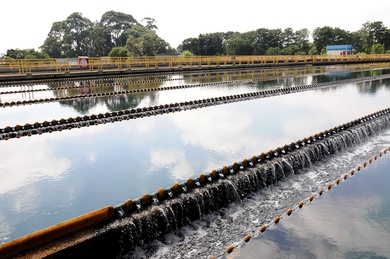
IDB Invest Structures the Largest Blue Bond in History: $1.35 Billion
The transaction supports the expansion of wastewater collection and treatment in the State of São Paulo and improves living conditions for 2.5 million people through an innovative financing solution.

Governance and Succession: Securing the Future of Mexico’s Nonbank Financial Institutions
IDB Invest study: key findings and a roadmap to strengthen governance and CEO and senior management succession planning in nonbank financial institutions (NBFIs).

Korea's Cutting-Edge Innovations to Transform Agribusiness in Latin America and the Caribbean
Discover how IDB Invest connects regional agribusinesses with leading innovators in Korea to accelerate smart agriculture, agritech, and sustainable growth.

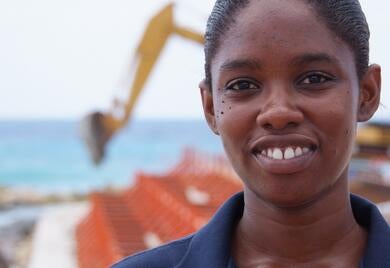
STEM minus Women = Private Sector Problem
By Kristin Dacey & Sanola Daley* Math and Science are for Men Women are not smart enough to be engineers. Women are not good at math. Isn’t this why globally men earn 70% of doctoral degrees in mathematics and the world rejoiced recently that a woman – Maryam Mirzakhani –won the top prize in mathematics for the first time?

Are women the only ones who need mentors?
Mentoring and work-life balance for men can be good for women and for business A recent article by the Financial Times described a private sector mentor program launched by the 30 Percent Club. It focused on women in the “danger zone” - defined as those between 28 and 38 years old. In the short-term, the program seeks to keep women in the workplace and promote leadership. The end goal is to achieve more women on boards.

Ugly food leads to innovation in fighting hunger
Latin America and the Caribbean is one of the biggest exporters of food on the planet. Yet, more than 52 million people, or 10 percent of the region’s population, still suffer from hunger and malnutrition. The July 2014 FAO publication Food Loss and Waste in Latin America and the Caribbean has highlighted a significant paradox the region faces. While the region has a sturdy food-production capacity, 6 percent of the total loss and waste of food in the world occurs in Latin America. Poor distribution and access to food has led to this misuse of sources of nutrition that could have met the needs of at least 47 million hungry people in the region.
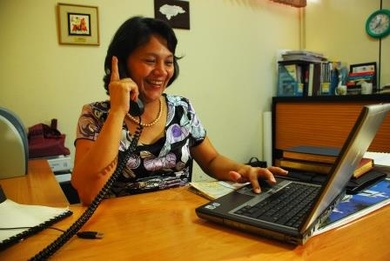
Four ways technology and data facilitate SME finance in Latin America & the Caribbean
* By Greg Da Re Technology, particularly the Internet, allows SMEs to share experiences, connect to different networks and operate in a world without the limitation of geographical barriers. Social networks are increasingly important for companies to position their brands. Social media in Latin America will near 300 million users by 2017. Technology can allow SMEs to increase their competitiveness and facilitate new ways to access financing.

Impact Investing: Defining 2014’s #1 Development Buzzword
* By the IDB's Partnership Office Is impact investing just another development buzzword? A passing fad? We believe it is not, and that it is an innovative approach to development financing that is here to stay.
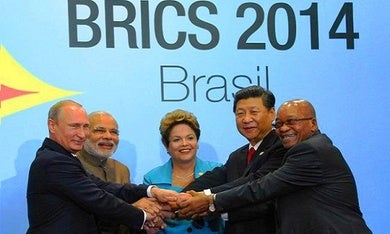
World looks to BRICS for sustainable business solutions
Multilaterals can provide sustainable business solutions – the recent BRICS summit highlighted how. Two weeks ago, the leaders of the five BRICS emerging nations –– Brazil, Russia, India, China and South Africa–– met in Fortaleza, Brazil for the 6th BRICS Summit. A $100 million development bank and a currency reserve pool were launched among the nations, a long-waited initiative since talks first began five years ago. This is no small feat. The five nations together account for half of the global population and 20 percent of the world’s GDP. Moreover, in the last ten years the economic outputs of these emerging nations have quadrupled . Although economic growth often translates into better living standards and opportunities for citizens, it is often coupled with key economic, social and environmental challenges –– especially in rapidly growing emerging economies.
