
Sustainable BusinessRecent posts
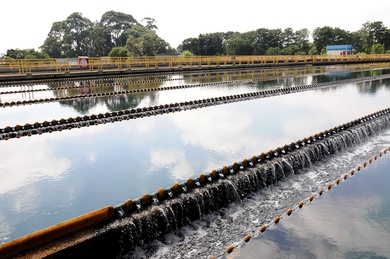
IDB Invest Structures the Largest Blue Bond in History: $1.35 Billion
The transaction supports the expansion of wastewater collection and treatment in the State of São Paulo and improves living conditions for 2.5 million people through an innovative financing solution.

Governance and Succession: Securing the Future of Mexico’s Nonbank Financial Institutions
IDB Invest study: key findings and a roadmap to strengthen governance and CEO and senior management succession planning in nonbank financial institutions (NBFIs).

Korea's Cutting-Edge Innovations to Transform Agribusiness in Latin America and the Caribbean
Discover how IDB Invest connects regional agribusinesses with leading innovators in Korea to accelerate smart agriculture, agritech, and sustainable growth.
Is Investment in Palm Oil Certification Worth It?
Palm oil has a terrible reputation. Especially among environmental and social advocates, palm oil is viewed as the crop responsible for a large-scale deforestation, particularly in Southeast Asia. Deforestation of carbon-rich forests leads to greenhouse gas emissions; between 2001 and 2010, palm oil-driven land-use change resulted in an average of 216-268 million tons of CO2 equivalent per year in Indonesia alone. For some perspective, that’s equivalent to the emissions from driving more than 45 million cars over the course of a year! Evidence also suggests labor rights violations, including child labor, at many plantations.

Best of 2015: Quinoa: more than a healthy super-food, a super solution to food security
Two years ago, the Food and Agriculture Organization (FAO) declared 2013 the International Year of Quinoa. Before then, it was scarcely found outside of colorful Andean marketplaces except at boutique shops in the U.S. and Europe. Now, many international food companies are embracing quinoa and exporting this super-food from Andean countries like Bolivia, Peru and Ecuador.
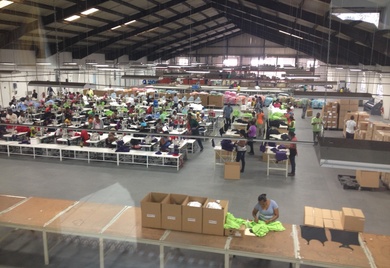
How Haiti is becoming a leader in the quality clothing industry
By Rahul Desai, Principal Specialist, Operations Coordinator, Opportunities for the Majority at the IDB Three business leaders did what others might think is too risky and counter-intuitive. Joey Adler, the CEO of Diesel Canada and founder of the OnexOne Foundation; Richard Coles, the owner of Multiwear, one of Haiti’s leading clothing manufacturers; and Rob Broggi, a former hedge fund executive, created a company to demonstrate that Haiti is a source of higher priced, high quality apparel. This shifts away from the prevailing paradigm as being only a low-cost producer of commodity garments. In 2013 they launched Industrial Revolution II, also known as IRII, a Haiti-based garment factory that while competitive, will still invest 50% of profits into its workers and their families.
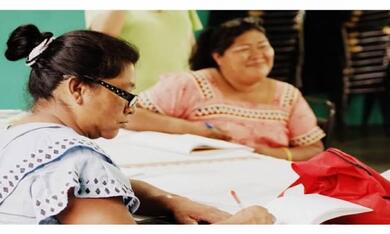
The private sector celebrates International Human Solidarity Day
December 20th marks the United Nation's International Human Solidarity Day, a day for "people from all nations, faiths, cultures and traditions to work together in common cause," according to Ban Ki-Moon. To commemorate the importance of solidarity, I wanted to share an experience that allowed my team of private sector experts to work with an indigenous community in Panama. A shared appreciation for skills-based volunteering and sustainable business facilitated the partnership.

Every watt matters: Geothermal and COP20
Latin America and the Caribbean leads the world in renewable energy. Hydropower makes up 60% of the generation matrix. Still, there is vast untapped potential for low-carbon energy development. During my current trip to the COP20 in Lima, Peru, I had a chance to focus on the long-established source of renewable energy that has yet to reach its full potential: geothermal in Latin America and the Caribbean.
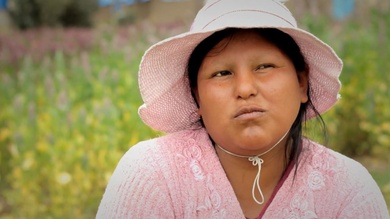
Empowering Rural Women in Agriculture
* By Nancy Lee, General Manager, Multilateral Investment Fund Empowering rural women as farmers, entrepreneurs, and leaders throughout the agricultural value chain is a topic with exceptional importance for agricultural productivity, fighting poverty and food security. Earlier this month, we at the Multilateral Investment Fund (MIF) of the Inter-American Development Bank (IDB) Group hosted a workshop in Washington to discuss how that issue plays out in Latin American and the Caribbean. The purpose was to take a deep dive into the lessons learned from MIF projects that seek to equip and raise the incomes of these rural women.
