
The private sector celebrates International Human Solidarity Day
December 20th marks the United Nation's International Human Solidarity Day, a day for "people from all nations, faiths, cultures and traditions to work together in common cause," according to Ban Ki-Moon. To commemorate the importance of solidarity, I wanted to share an experience that allowed my team of private sector experts to work with an indigenous community in Panama. A shared appreciation for skills-based volunteering and sustainable business facilitated the partnership.

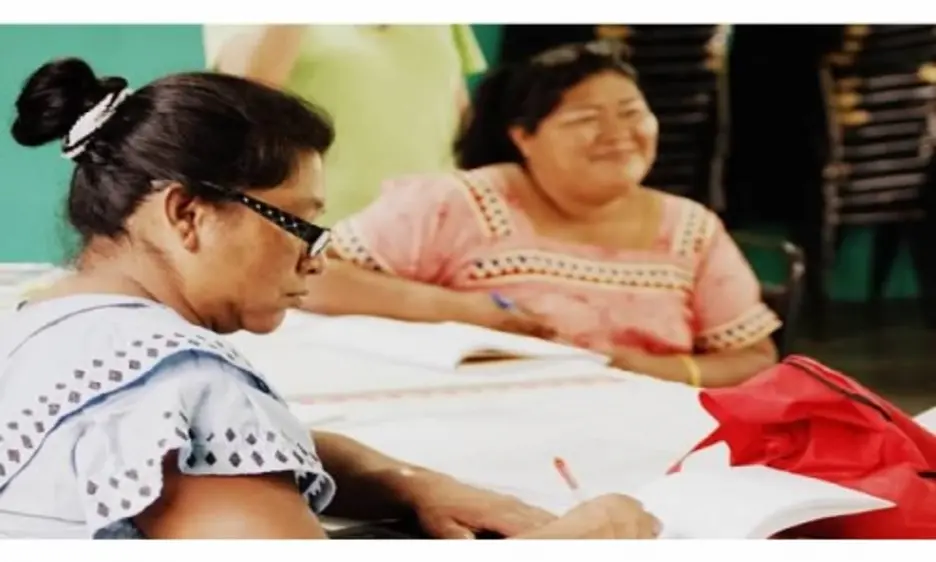
[caption id="attachment_818" align="alignleft" width="550"] ASMUNG: a women-led NGO in Panama visited by volunteers who supported the launch of its sustainable tourism businesses[/caption]
Our journey to know the Ngäbe-Bugle women began in 2010, when my department co-sponsored a 5K run in Washington D.C. to support the Association of Ngäbe-Bugle women (ASMUNG). ASMUNG’s mission: strengthen the living and working conditions for local indigenous women through cultural awareness, income-generating opportunities and economic empowerment. The run was a success!
Motivated IDB staff came out to run on a cold and wet Saturday morning. We raised $10,000. For 5 kilometers, I walked and talked with ASMUNG’s two leaders, Doris and Emily. They spoke of the Chiriquí province, their attempts at preserving what few cultural landmarks remain, the restaurant that still could not break even and a handicraft business that had more producers than buyers.
I was struck by the synergies that existed. These women sought to launch a small yet commercially-viable businesses focused on eco-tourism and sustainable production, and my team of business professionals focused their work on identifying and developing private sector projects with social and environmental value.
Determined to continue to engage these women, who represented Panama’s largest and most poverty stricken indigenous peoples, we had two choices – donating money or donating time. Donating money seemed too easy. Plus, the goal was to gain a sense of solidarity. I wanted staff to live and feel what someone else’s day-to-day is like. My own experience has shown that through immersion, perceptions change and true development happens.
In 2012, eight staff members received training about the social and economic challenges confronting the Ngäbe-Bugle community. Extreme poverty rates near 90%, and birth rates and child malnutrition rates are the highest in the country. Men and women have little education and resources to escape the cycle. We were also trained in cultural sensitivity, local customs, and even how to ask questions respectfully.
Training was critical as was the focus on skills-based volunteering: leveraging the existing technical and social skills of IDB staff and matching them to voids in the community. According to Point of Light nonprofit, while only 12 percent of corporate volunteering aligns skills with roles, skills-based volunteering usually proves more fulfilling for the volunteers, organizations and communities.
The experience of staff immersing themselves in the Ngäbe-Bugle culture was later described by some as “humbling,” “reinvigorating,” “once in a lifetime.” And the businesses improved. Alongside the women leaders of ASMUNG, we created a marketing plan. We marked hiking paths for tourist excursions. Inventories, accounts payable and cash flows were meticulously calculated. The restaurant and artisan store were renovated to attract sought after foreign tourists and share the Ngäbe-Bugle’s history and culture.
[caption id="attachment_1603" align="alignleft" width="300"] School girls whose mothers participate in the women's association[/caption]
International Human Solidarity Day reminds me of our commitment to ASMUNG and to the beautiful, influential women leaders who keep its small businesses going. I encourage others to use this day to "work together in common cause" with someone outside your traditional circle. The rewards of doing so can be good for you and for the private sector.
Video:
[caption id="attachment_1602" align="aligncenter" width="720"] ASMUNG women head to a meeting[/caption]
[caption id="attachment_1609" align="aligncenter" width="720"] A volunteer works on decorating the artisan store[/caption]

The artisan store after volunteers decorate and organize inventory. One of ASMUNG's many sustainable businesses.
[caption id="attachment_1611" align="aligncenter" width="550"] Marketing materials arrive to advertise ASMUNG's sustainable enterprises.[/caption]
Adapted from a post published on August 7, 2014.
Authors

Hans Schulz
Hans Schulz es asesor independiente de inversiones sostenibles emergentes. Previamente, se desempeñó como vicepresidente interino del Sector Privado y Operaciones sin Garantía Soberana del Banco Interamericano de Desarrollo (BID), y como Gerente General del Departamento de Financiamiento Estructurado y Corporativo, donde supervisaba las operaciones del sector privado del Banco en materia de infraestructura, mercados financieros, industrias y servicios, y salud y educación. Previamente, Hans dirigió el grupo de mercados financieros y condujo la creación del Programa de Facilitación del Financiamiento al Comercio Exterior del BID. También ejerció el cargo de Asesor Senior sobre el Sector Privado al Vice Presidente Ejecutivo del BID. Antes de ingresar al BID, Hans se desempeñó en la Corporación Andina de Fomento (CAF) en Venezuela, la Oficina de la Comisión Económica para América Latina y el Caribe (CEPAL) en Chile, y en WestLB en Alemania. Hans es ciudadano alemán y posee una maestría en economía de Southern Illinois University y licenciaturas en economía y administración y empresas de la Universidad de Marburg en Alemania.
LIKE WHAT YOU JUST READ?
Subscribe to our mailing list to stay informed on the latest IDB Invest news, blog posts, upcoming events, and to learn more about specific areas of interest.
SubscribeFinancial Institutions
Related Posts

Governance and Succession: Securing the Future of Mexico’s Nonbank Financial Institutions
IDB Invest study: key findings and a roadmap to strengthen governance and CEO and senior management succession planning in nonbank financial institutions (NBFIs).
Facing the Storm: How IDB Invest Supports Caribbean Private Sector Resilience
IDB Invest is partnering with the Green Climate Fund to help Caribbean businesses better withstand future climate shocks through blended finance and technical assistance.
Reimagining the Future of Finance in Latin America and the Caribbean
At the FinnLAC Forum 2025 in Miami, the IDB Group hosted over 500 industry leaders and experts to help redefine the future of finance in Latin America and the Caribbean. The event focused on improving the ability of individuals and companies to better manage their finances, withstand economic shocks, and invest in their long-term prosperity. By highlighting innovations that broaden access, strengthen resilience, and promote overall financial health, the forum set the stage for more sustainable financial systems across the region.