
Can your company be a sustainability champion?
Long-term financial performance is directly proportional to good governance, environmental stewardship and social responsibility, but you probably already knew that. If so, then you should also be able to prove it and measure it, because nowadays a vision is not enough to convince your clients.
“What gets measured gets managed.”- Peter Drucker (known as the father of modern management)
The Problem
What if I tell you that purpose is not enough and that measurement encourages ambition? When I look back to my early school days I remember some of the —silly, but edifying— competitions with my friends and classmates. The range of our “high-performance rivalries” went from copying text from the chalkboard into our notebooks in the fastest possible time, comparing math grades at semester end, scoring backheel goals in a soccer match and much more. Measuring and comparing records was the motivation for continuous improvement to beat my own achievements and those of my fellow mates. But what does that have to do with sustainability? Everything.
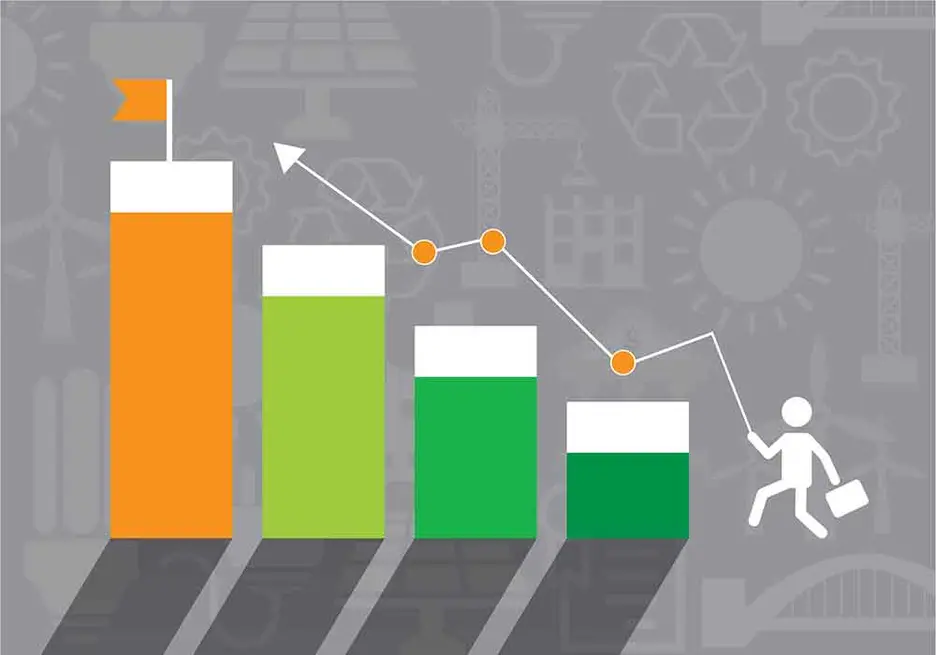
Measuring progress using a comprehensive yet meaningful list of indicators is the core foundation to turn sustainability into a competitive advantage.
The Solution: Measuring, reporting, disclosing.
Year after year more corporations perceive the competitive edge existent in being part of a sustainability rating and index. According to the Governance & Accountability Institute, 82% of S&P 500 Companies published Corporate Sustainability reports in 2016. In this context a sustainability index is a barometer to measure the success level of a company. It acts not only as an MRI to detect environmental, social and governance issues, but also indicates the economic relevance of sustainability parameters for corporate management and investors.
But we need to go further. A recent report from KPMG on corporate responsibility and sustainability indicates that simply linking corporate responsibility activities thematically to the United Nations Sustainable Development Goals (SDGs) is not enough. People want to know how companies are contributing to achieve the goals, and what is the actual impact. Not only does civil society want this information, but also several large institutional investors are exploring how to align their investment approaches with the SDGs. This is why full transparency and full disclosure are key.
The economic relevance of sustainability parameters for corporate management and investors are manifold. A study by the University of Oxford showed impressive results on how disclosing sustainability practices can drive financial outperformance. For example, 90% of the studies on the cost of capital indicate that sound environmental, social and governance (ESG) standards lower the cost of capital of companies.
If only there were a specific tool for companies in Latin American and the Caribbean to measure and compare performance of environmental, social and governance (ESG) indicators…THERE IS.
IndexAmericas
IndexAmericas is the world’s first sustainability index exclusive to Latin America and the Caribbean region. Created by the IDB Group (Inter-American Development Bank and IDB Invest) in partnership with Thomson Reuters, S-Network Indexes and Florida International University, IndexAmericas recognizes the top 100 publicly traded companies operating in the region and leading the way in sustainability. It also identifies the top 30 sustainable companies headquartered in the region.
IndexAmericas focuses on four key dimensions: environment, society, corporate governance and development (ESGD). Different from other sustainability indexes, IndexAmericas assesses publicly data rather than using a self-assessment questionnaire. It is a management tool that measures more than 400 ESG indicators and 15 IDB Group proprietary key development indicators to evaluate corporate sustainability. I think professor Peter Drucker would be proud to see this achievement.
Want to learn more? Visit IndexAmericas
[gallery type="slideshow" size="full" link="none" ids="8440,8441,8443,8442"]
Subscribe to receive more content like this!
[mc4wp_form]

Long-term financial performance is directly proportional to good governance, environmental stewardship and social responsibility, but you probably already knew that. If so, then you should also be able to prove it and measure it, because nowadays a vision is not enough to convince your clients.
“What gets measured gets managed.”- Peter Drucker (known as the father of modern management)
The Problem
What if I tell you that purpose is not enough and that measurement encourages ambition? When I look back to my early school days I remember some of the —silly, but edifying— competitions with my friends and classmates. The range of our “high-performance rivalries” went from copying text from the chalkboard into our notebooks in the fastest possible time, comparing math grades at semester end, scoring backheel goals in a soccer match and much more. Measuring and comparing records was the motivation for continuous improvement to beat my own achievements and those of my fellow mates. But what does that have to do with sustainability? Everything.
Measuring progress using a comprehensive yet meaningful list of indicators is the core foundation to turn sustainability into a competitive advantage.
The Solution: Measuring, reporting, disclosing.
Year after year more corporations perceive the competitive edge existent in being part of a sustainability rating and index. According to the Governance & Accountability Institute, 82% of S&P 500 Companies published Corporate Sustainability reports in 2016. In this context a sustainability index is a barometer to measure the success level of a company. It acts not only as an MRI to detect environmental, social and governance issues, but also indicates the economic relevance of sustainability parameters for corporate management and investors.
But we need to go further. A recent report from KPMG on corporate responsibility and sustainability indicates that simply linking corporate responsibility activities thematically to the United Nations Sustainable Development Goals (SDGs) is not enough. People want to know how companies are contributing to achieve the goals, and what is the actual impact. Not only does civil society want this information, but also several large institutional investors are exploring how to align their investment approaches with the SDGs. This is why full transparency and full disclosure are key.
The economic relevance of sustainability parameters for corporate management and investors are manifold. A study by the University of Oxford showed impressive results on how disclosing sustainability practices can drive financial outperformance. For example, 90% of the studies on the cost of capital indicate that sound environmental, social and governance (ESG) standards lower the cost of capital of companies.
If only there were a specific tool for companies in Latin American and the Caribbean to measure and compare performance of environmental, social and governance (ESG) indicators…THERE IS.
IndexAmericas
IndexAmericas is the world’s first sustainability index exclusive to Latin America and the Caribbean region. Created by the IDB Group (Inter-American Development Bank and IDB Invest) in partnership with Thomson Reuters, S-Network Indexes and Florida International University, IndexAmericas recognizes the top 100 publicly traded companies operating in the region and leading the way in sustainability. It also identifies the top 30 sustainable companies headquartered in the region.
IndexAmericas focuses on four key dimensions: environment, society, corporate governance and development (ESGD). Different from other sustainability indexes, IndexAmericas assesses publicly data rather than using a self-assessment questionnaire. It is a management tool that measures more than 400 ESG indicators and 15 IDB Group proprietary key development indicators to evaluate corporate sustainability. I think professor Peter Drucker would be proud to see this achievement.
Want to learn more? Visit IndexAmericas
[gallery type="slideshow" size="full" link="none" ids="8440,8441,8443,8442"]
Authors

Emerson Resende
Emerson Resende es experto senior en sostenibilidad corporativa de la división de Servicios de Asesoría del Departamento de Operaciones de BID Invest. Emerson tiene más de 10 años de experiencia trabajando en el sector privado y multilateral, incluyendo el manejo de consultorías en África y América Latina, y apoyando el desarrollo de políticas internacionales de resiliencia climática en las Naciones Unidas. Emerson tiene una vasta experiencia estructurando y administrando proyectos multimillonarios y complejos, y creando valor con innovadoras ideas de sostenibilidad. Además, cuenta con un magister en Manejo de Carbono de University of Edinburgh Business School.
LIKE WHAT YOU JUST READ?
Subscribe to our mailing list to stay informed on the latest IDB Invest news, blog posts, upcoming events, and to learn more about specific areas of interest.
SubscribeFinancial Institutions
Related Posts

Governance and Succession: Securing the Future of Mexico’s Nonbank Financial Institutions
IDB Invest study: key findings and a roadmap to strengthen governance and CEO and senior management succession planning in nonbank financial institutions (NBFIs).

Facing the Storm: How IDB Invest Supports Caribbean Private Sector Resilience
IDB Invest is partnering with the Green Climate Fund to help Caribbean businesses better withstand future climate shocks through blended finance and technical assistance.

Reimagining the Future of Finance in Latin America and the Caribbean
At the FinnLAC Forum 2025 in Miami, the IDB Group hosted over 500 industry leaders and experts to help redefine the future of finance in Latin America and the Caribbean. The event focused on improving the ability of individuals and companies to better manage their finances, withstand economic shocks, and invest in their long-term prosperity. By highlighting innovations that broaden access, strengthen resilience, and promote overall financial health, the forum set the stage for more sustainable financial systems across the region.