
Boosting Exports While Reducing Carbon Emissions
In addition to offering various tax, customs, regulatory and other incentives for investors, free zones and industrial parks in Latin America and the Caribbean are increasingly adding another benefit to the mix: a reduced carbon footprint through self-supplied renewable energy for production.

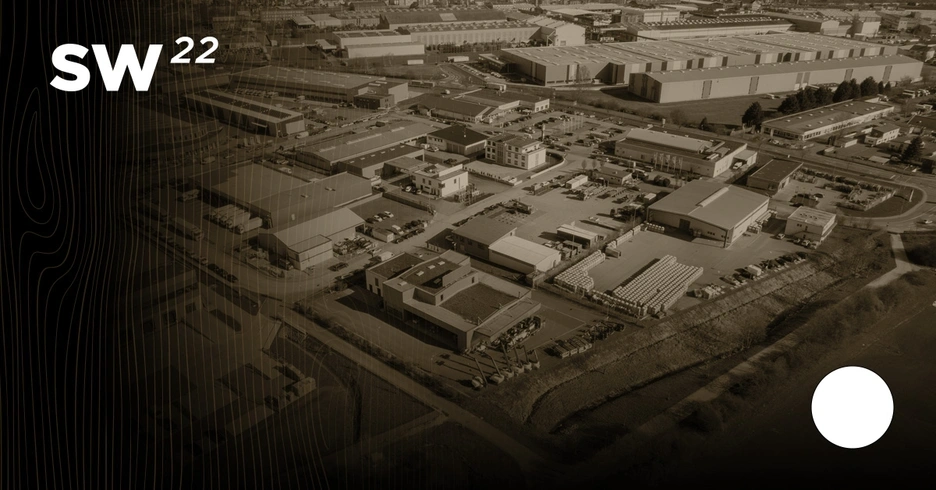
Free zones and industrial parks play an important role in economic development, particularly in regions such as Central America. Not only do they attract Foreign Direct Investment (FDI), but they create jobs and boost exports. They also have a role to play in making the carbon transition a reality.
El Salvador is a case in point. The country is home to more than 17 free zones and industrial parks hosting over 240 international companies, which have created over 250,000 jobs and account for a significant share of exports. Manufacturing sector exports reached $5 billion in 2021, a 31% increase over 2020, mainly driven by the textile, food, paper, and plastics industries, and exports from the maquila sector in particular (mostly clothing) were up 40% at $1.2 billion.
The country is now promoting a new Special Economic Zone (EEZ) to attract more investment in industrial parks and service centers.
However, balancing economic growth with sustainability is both a necessity and challenge in today’s world. This is especially true for small developing countries such as El Salvador where the effects of climate change are most profound. Considering that power generation (electricity and heat) and industry together account for around 60% of global greenhouse gas emissions, one significant way to reduce emissions is to use renewable energy to power the production of goods and services.
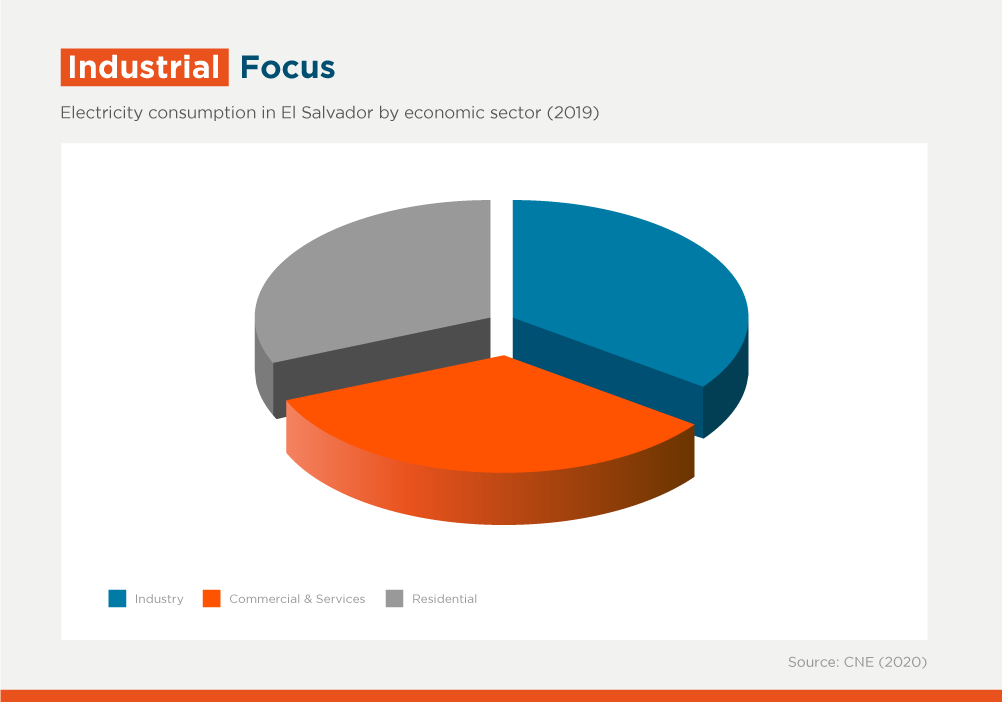
In El Salvador, the industrial sector is the largest consumer of electricity, at 35% in 2019. At the same time, the share of renewable energy used to generate electricity in the country has been rising, reaching 64% of its total installed capacity in 2019, mainly hydroelectric (27%), with solar accounting for 13%. This shift has been driven by the ongoing expansion of renewable energy projects in the country, as well as an increase in the self-supply of clean electricity within the private sector, particularly through small solar generation plants.
This is the case for American Industrial Park (AIP), one of the main free zones in El Salvador, which leases over 200,000 square meters of industrial space to 26 companies that manufacture mostly clothing for export and employ nearly 12,000 people. Located near the rural departments of La Libertad, Santa Ana, and Sonsonate, AIP provides its clients with their own solar energy using its dedicated power transmission lines. By providing renewable energy AIP can attract international clients that are focused on sustainable production and reducing their carbon footprint.
IDB Invest supported AIP by providing financing for its 8.3 MW solar plant and expansion of an additional 17,000 square meters of industrial space. By the end of 2021, after two years of operation, the project had provided a total of 24,571 MWh of solar power to the industrial park, replacing fossil fuel-generated electricity from the grid and reducing GHG emissions by 10,811 tons of CO2. This is equivalent to the emissions from 2,104 homes or 27 million miles driven by an average gasoline-powered passenger vehicle.
Today, AIP is on track to becoming the first industrial park and free zone in El Salvador with a fully self-sustaining renewable power supply, potentially serving as a model for replication in other countries in the region.
Check out our series of Client Impact DEBriefs to learn more about the impact results achieved by AIP in El Salvador.
This blogpost is published in connection with IDB Invest Sustainability Week 2022, to be held between June 28 and July 1 in the city of Miami. Learn here how to register to participate, either in person or virtually.
Authors

Joanne Riley
Joanne Riley is a Development Effectiveness Officer in the Development Effectiveness Division (DVF) of IDB Invest, where she works in the structuring, supervision, and evaluation of projects. Prior to joining the IDB Invest she worked in the Office of the Executive Director for the Caribbean at the Inter-American Development Bank (IDB) and the Government of Barbados. With over 25 years’ experience in monitoring and evaluation of projects, she has an MSc in Project Planning and Development from University of Bradford, United Kingdom.

Juan Fonseca
Juan is a Senior Investment Officer of the Manufacturing Unit at IDB Invest for the Central American region. He is a Costa Rican citizen and has worked for almost eighteen years at the IDB Group, promoting the sustainable development of Latin America and the Caribbean through the structuring and implementation of financial solutions for private sector clients. During this time, he has led more than 50 projects in most of the Central American countries and some in South America. His professional career in banking, finance, and management has been carried out more than 25 years, where his main focus has been working with companies and projects at corporate level. His extensive experience includes financial and risk management, loan structuring, syndications, investment banking, project financing, equity and mezzanine financing, mainly. Juan holds a Master’s Degree in Business Administration from INCAE Business School and a Bachelor's Degree in Business Administration from the University of Costa Rica. Likewise, he is a Technician in Stock Exchange Operations of UCR/FUNDEPOS and graduated from IPADE’s Top Management Program of Mexico.
LIKE WHAT YOU JUST READ?
Subscribe to our mailing list to stay informed on the latest IDB Invest news, blog posts, upcoming events, and to learn more about specific areas of interest.
SubscribeFinancial Institutions
Related Posts

Governance and Succession: Securing the Future of Mexico’s Nonbank Financial Institutions
IDB Invest study: key findings and a roadmap to strengthen governance and CEO and senior management succession planning in nonbank financial institutions (NBFIs).
Facing the Storm: How IDB Invest Supports Caribbean Private Sector Resilience
IDB Invest is partnering with the Green Climate Fund to help Caribbean businesses better withstand future climate shocks through blended finance and technical assistance.

Reimagining the Future of Finance in Latin America and the Caribbean
At the FinnLAC Forum 2025 in Miami, the IDB Group hosted over 500 industry leaders and experts to help redefine the future of finance in Latin America and the Caribbean. The event focused on improving the ability of individuals and companies to better manage their finances, withstand economic shocks, and invest in their long-term prosperity. By highlighting innovations that broaden access, strengthen resilience, and promote overall financial health, the forum set the stage for more sustainable financial systems across the region.