
Sustainable BusinessRecent posts
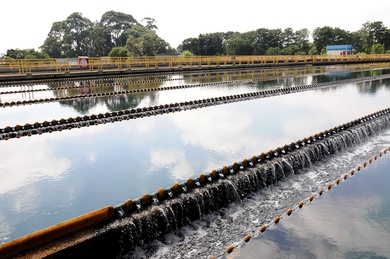
IDB Invest Structures the Largest Blue Bond in History: $1.35 Billion
The transaction supports the expansion of wastewater collection and treatment in the State of São Paulo and improves living conditions for 2.5 million people through an innovative financing solution.

Governance and Succession: Securing the Future of Mexico’s Nonbank Financial Institutions
IDB Invest study: key findings and a roadmap to strengthen governance and CEO and senior management succession planning in nonbank financial institutions (NBFIs).
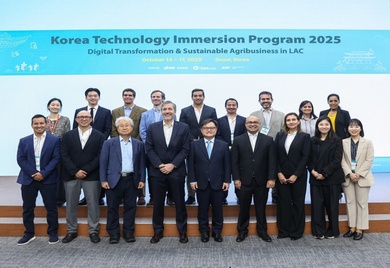
Korea's Cutting-Edge Innovations to Transform Agribusiness in Latin America and the Caribbean
Discover how IDB Invest connects regional agribusinesses with leading innovators in Korea to accelerate smart agriculture, agritech, and sustainable growth.
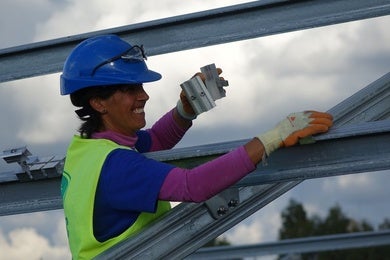
No Women in Renewable Energy? Look Again.
Three years ago when the Canadian Climate Fund (C2F) first launched, private sector clients would balk when we asked them about the gender impact of their proposed renewable energy projects. The renewable energy sector is growing in the region, bringing with it new job opportunities, skills requirements and local business development. In this part of the climate change conversation, women in renewable energy are often invisible. This was, after all, a man’s world – renewable energy projects are primarily construction and engineering. We know the numbers – women earn only 11 percent of Sciences, Technology, Engineering and Mathematics (STEM) degrees in the region.
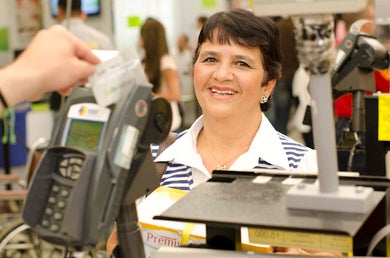
Overcoming stereotypes could save your business
By Susan Olsen, Lead Specialist, Opportunities for the Majority, IDB Difficulty accessing financing, poor infrastructure and incapacity to scale are cited as reasons why businesses that target the (BOP) fail. Yet, an unwillingness to overcome base of the pyramid stereotypes could easily be the most important explanation as to why some BoP-focused companies aren’t successful. Shattering stereotypes before starting an inclusive business model was the basis for a provocative panel that took place during the Inter-American Development Bank’s BASE III Forum in Mexico City.

Five reasons FinTech companies are an opportunity for financial institutions and SMEs
By Greg Da Re Access to financing has been and continues to be the main obstacle facing small and medium-sized enterprises (SMEs). According to a recent survey, 90% of all banks surveyed in Latin America and the Caribbean consider SMEs strategically important for their business, yet 44% acknowledge that their portfolio lacks suitable financial products for such enterprises.
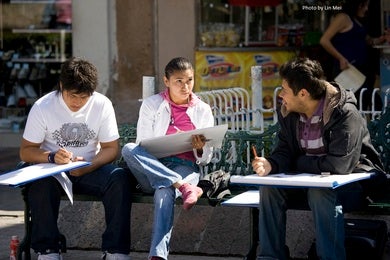
Don’t let base of the pyramid millennials catch your company off guard
Hardly a day passes without a new article on how businesses are analyzing the needs, wants and spending trends of millennials. In the US alone, millennials (or Generation Y), those born between 1980 and 2000, represent 30 percent of the population. By 2025 they will be 75 percent of the workforce of this country. The impact that millennials are starting to have on the global economy, the environment, and politics is enormous. But “millennial mania” is dominated by studies, research and marketing efforts that focus on affluent individuals. Meanwhile, in Latin America and the Caribbean a market of 77 million low-income or base of the pyramid millennials goes almost unnoticed.
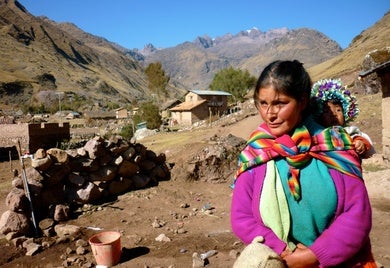
How to make cultural tourism inclusive and sustainable
If you want to start a hotel, the normal thing to do is buy some land, build the hotel, hire a few locals for cooking, cleaning and maintenance and open for business.
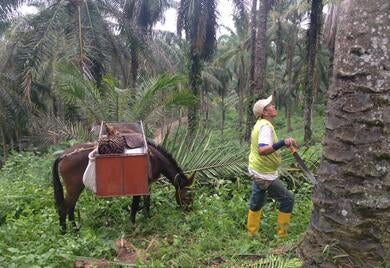
Four Ways to Get the Most out of Palm Oil in Latin America and the Caribbean
What do soap, Ben and Jerry’s, and KitKat bars have in common? They all contain palm oil, an oil produced by the oil palm tree. Indonesia and Malaysia produce the vast majority of the world’s supply and have experienced significant environmental consequences as a result. Now the crop’s profitability is attracting interest in other tropical climates, including Latin America and the Caribbean.
