
Sustainable BusinessRecent posts
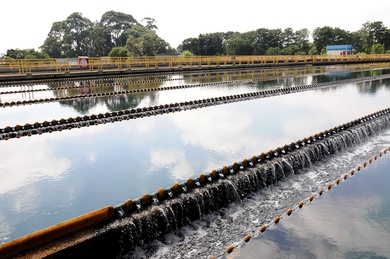
IDB Invest Structures the Largest Blue Bond in History: $1.35 Billion
The transaction supports the expansion of wastewater collection and treatment in the State of São Paulo and improves living conditions for 2.5 million people through an innovative financing solution.

Governance and Succession: Securing the Future of Mexico’s Nonbank Financial Institutions
IDB Invest study: key findings and a roadmap to strengthen governance and CEO and senior management succession planning in nonbank financial institutions (NBFIs).

Korea's Cutting-Edge Innovations to Transform Agribusiness in Latin America and the Caribbean
Discover how IDB Invest connects regional agribusinesses with leading innovators in Korea to accelerate smart agriculture, agritech, and sustainable growth.
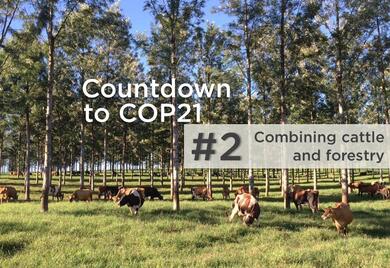
Combining cattle and forestry: five benefits of silvopastoralism
One month ago I was in Paraguay, visiting with cattle producers to study an innovative production system. Even in spring, Paraguay is hot, and I was soon sweating under the intense sun. If I suffer from a twenty minute walk in the sun, how would cows that spend all day outside feel?
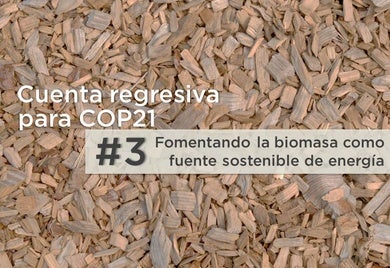
5 reasons to rethink biomass in Latin America
With less than a week to go until COP21, governments across the globe make their preparations to achieve an international, legally-binding agreement on climate change. And the progress is apparent. Over 140 countries, including most of Latin America and the Caribbean, have submitted their respective Intended Nationally Determined Contributions (INDCs). These action plans allow governments to communicate internationally where climate actions will take place post-2020. One conclusion so far: clean energy will be fundamental to carbon emission reductions for all governments, including top global carbon emitters. With this is mind, it is important to remember the benefits of an underutilized renewable energy technology: sustainably sourced biomass.
Four transportation projects leading in sustainability
Climate change and transportation have an intimate yet complex relationship. Transport accounts for one-fifth of the world’s energy use and one-quarter of energy-related CO2 emissions, making it a main cause of global warming. On the other hand, climate change can severely affect transportation systems, resulting in shorter project life spans, reduced quality of infrastructure services and increased maintenance and operating costs. These impacts on infrastructure harm the economy as a whole by causing trade and supply chain disruptions and hindering access to markets, schools and health centers.

“One point five to stay alive” - Three ways the Caribbean's private sector can mobilize climate action
One goal of the upcoming Paris negotiations is to limit global temperature rise to two degrees Celsius. The Caribbean is aiming even lower, saying it much achieve, “One point five to stay alive.” The Caribbean loses up to five percent of GDP annually due to natural disasters linked to climate change. Rising sea levels and water temperatures, ocean acidification and extreme weather events disproportionately affect the small, low-lying island nations. For them, closing the gap between climate pledges and climate actions is one way to measure the success of COP21. As ecosystems approach their limits, key business sectors can strengthen their efforts to bridge this crucial divide.
Adaptation matters: the private sector’s role adapting to climate change
At the 21st edition of the annual climate conference (COP 21) in early December, financing commitments by countries will be top on the agenda. Who is paying for what? How much will they pay? And by when will they do so? One major issue of debate in the face of limited resources is how much money should go towards avoiding and reducing GHG emissions – "mitigation" – versus how much should go towards supporting people, businesses and ecosystems to adapt to the effects of climate change.

Every watt matters: Geothermal in Latin America and the Caribbean
[caption id="attachment_2505" align="alignleft" width="440"] Geothermal and COP20[/caption] Latin America and the Caribbean leads the world in renewable energy. Hydropower makes up 60 percent of the generation matrix. Still, there is vast untapped potential for low-carbon energy development. One long-established source of renewable energy that has yet to reach its full potential is geothermal in Latin America and the Caribbean.
