
Sustainable BusinessRecent posts
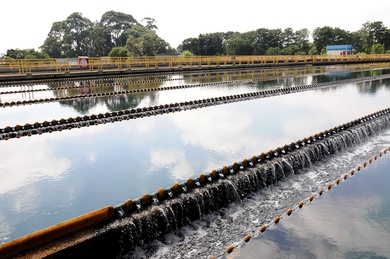
IDB Invest Structures the Largest Blue Bond in History: $1.35 Billion
The transaction supports the expansion of wastewater collection and treatment in the State of São Paulo and improves living conditions for 2.5 million people through an innovative financing solution.

Governance and Succession: Securing the Future of Mexico’s Nonbank Financial Institutions
IDB Invest study: key findings and a roadmap to strengthen governance and CEO and senior management succession planning in nonbank financial institutions (NBFIs).

Korea's Cutting-Edge Innovations to Transform Agribusiness in Latin America and the Caribbean
Discover how IDB Invest connects regional agribusinesses with leading innovators in Korea to accelerate smart agriculture, agritech, and sustainable growth.

The best of 2015: Quinoa a super-food and super-solution to food security
Two years ago, the Food and Agriculture Organization (FAO) declared 2013 theInternational Year of Quinoa. Before then, it was scarcely found outside of colorful Andean marketplaces except at boutique shops in the U.S. and Europe. Now, many international food companies are embracing quinoa and exporting this super-food from Andean countries like Bolivia, Peru and Ecuador.
Infrastructure 360º Awards: promoting best practices in sustainable infrastructure
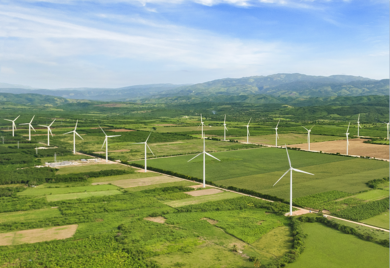
* By Ana María Vidaurre-Roche A sustainable approach to project design has allowed a metro line in Peru to reduce greenhouse gas emissions up to 80% above what regulations require. The line connects 11 districts across Lima and improves access and mobility, increasing the city’s productivity level by reducing commuting times by almost four times. The project has created meaningful actions that go beyond its immediate business: engaging community groups in cultural and reforestation programs to enhance public space, and helping address other visible problems such as social insecurity, youth unemployment, traffic chaos, and pollution. In the Dominican Republic, a wind farm project driven by a sustainable strategy provided an agrarian, low-income region with power and brought added value to the communities through educational and social programs, rehabilitation of community assets, and support of local businesses.
What good is capital without customers? Financial inclusion is necessary for healthy societies
*By: Tomas Miller The financial inclusion strategies that several countries in Latin America and the Caribbean are adopting and incorporating into their national development policies aim at increasing access to and use of financial services for segments of the population that have been excluded or underserved by financial systems. These policies assume that achieving a higher level of financial inclusion is a necessary condition for increasing the social inclusion of these excluded people. What good is having a solvent and liquid financial system if it serves only businesses and powerful families? What good is capital without customers?

How To Export In 7 Steps
*By: Antonello Bove Many a business reaches the point where it outgrows its market. The company has a solid, sought-after product, but finds that it will not be able to sell much more in its current market, be it because it already supplies the whole market or because stiff competition means it has to look elsewhere to continue growing.

From toll roads to ‘smart’ mobility projects: the evolution of PPPs
* By:David Bloomgarden Public-private partnerships (PPPs) to build and maintain infrastructure are no longer just for big economies in traditional sectors, involving projects such as toll roads and ports. Small economies and regional and local government are realizing the potential of engaging the private sector in infrastructure projects.

The one thousand and one questions on business ethics
What is an ethical business? Bernardo Toro, an advisor to the Avina Foundation, said it clearly and with humor during the opening ceremony of the Latin America Impact Investing Forum (FLII) which took place in Mérida, México at the end of February: “It is a business that doesn’t prey on people; one that creates real value; one that pays attention to what’s important, not what’s showy.” Simple and to the point.
