
Sustainable BusinessRecent posts
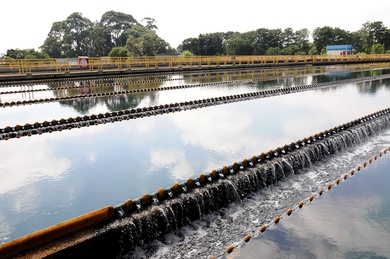
IDB Invest Structures the Largest Blue Bond in History: $1.35 Billion
The transaction supports the expansion of wastewater collection and treatment in the State of São Paulo and improves living conditions for 2.5 million people through an innovative financing solution.

Governance and Succession: Securing the Future of Mexico’s Nonbank Financial Institutions
IDB Invest study: key findings and a roadmap to strengthen governance and CEO and senior management succession planning in nonbank financial institutions (NBFIs).
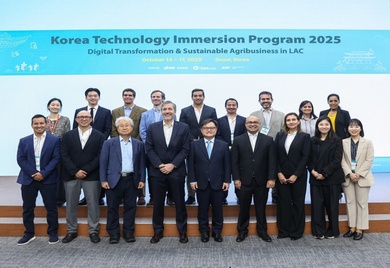
Korea's Cutting-Edge Innovations to Transform Agribusiness in Latin America and the Caribbean
Discover how IDB Invest connects regional agribusinesses with leading innovators in Korea to accelerate smart agriculture, agritech, and sustainable growth.

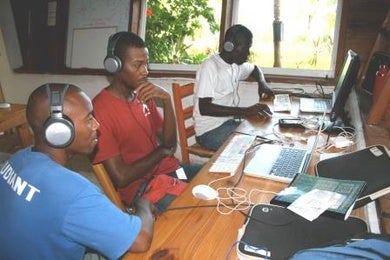
Wish there were more hours in the day? Distance learning can maximize time and earning potential
Doesn’t it always seem like there aren’t enough hours in the day? How can we possibly fit it all in? The same is true for young people in Latin America and the Caribbean - especially those in lower income or vulnerable communities. For the high school graduates, many aren’t able to go directly to university for financial, family or other reasons. For example, Estacio, a large private university in Brazil, estimates that approximately 40% of high school graduates in Brazil go directly to university. Many others start a job, or a family or both.

Can innovations in healthcare technology leapfrog to better solutions?
In our experience at the IDB, healthcare systems in many countries in Latin America and the Caribbean (LAC) suffer from severe resource constraints. Competing health priorities, budget restrictions, staff shortages and general technological deficiencies leave large segments of the population without basic treatment.

The Caribbean Private Sector: How to expand lending
“All cassava have the same skin, but all don’t taste the same way,” is a Caribbean proverb which serves as a reminder that while people may appear alike on the outside, each is quite unique on the inside. The saying, which first originated in Guyana, speaks about the individuality of people, yet it also resonates with me as a development professional when thinking about the diversity of the Caribbean economies. From what I have seen, each country in this region offers a distinct mix of cultural richness, entrepreneurialism, sector expertise, biodiversity, natural resources and much more.

Why invest in health?
On September 18, 2013, I co-led along with Geetha Tharmaratnam (The Abraaj Group) a webinar for the Global Impact Investing Network (GIIN) Investors’ Council on opportunities in the health sector to address critical needs in emerging markets. Most countries in Latin America and the Caribbean have universal public healthcare systems, however, the infrastructure, especially outside of capital cities and for higher complexity needs, is typically insufficient. There are long wait times for services, limited geographic access to specialists and often long payment cycles for private providers serving lower income patients. These combined factors result in a lack of access to quality care in a timely fashion.

Five ways the IDB is scaling up green private sector investment
Recently several colleagues and I traveled to Copenhagen, Denmark, to participate in the Global Green Growth Forum (3GF) Annual Summit along with 450 other leaders from government, private sector and civil society. I had the opportunity to address three panels and used the forums to discuss ways the IDB’s private sector is tackling the climate crisis.
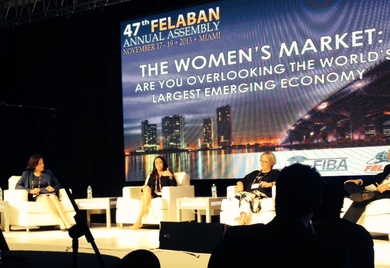
"A man is not a financial plan:" Banks globally target women clients
Westpac's Larke Riemer is director of women's markets and not shy about her business, offering straightforward advice for women clients. Five top leaders in women's banking, including Riemer, spoke today on an eye-opening panel at the 47th annual FELABAN (Latin American Federation of Banks) conference in Miami, FL. The session highlighted how to strengthen female financial inclusion.
