
Sustainable BusinessRecent posts
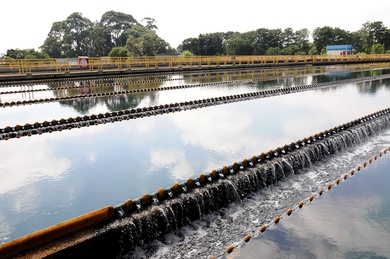
IDB Invest Structures the Largest Blue Bond in History: $1.35 Billion
The transaction supports the expansion of wastewater collection and treatment in the State of São Paulo and improves living conditions for 2.5 million people through an innovative financing solution.

Governance and Succession: Securing the Future of Mexico’s Nonbank Financial Institutions
IDB Invest study: key findings and a roadmap to strengthen governance and CEO and senior management succession planning in nonbank financial institutions (NBFIs).
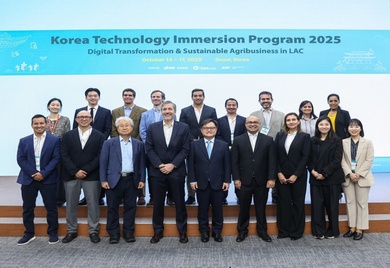
Korea's Cutting-Edge Innovations to Transform Agribusiness in Latin America and the Caribbean
Discover how IDB Invest connects regional agribusinesses with leading innovators in Korea to accelerate smart agriculture, agritech, and sustainable growth.


Three lessons from the German "Mittelstand"
Can Latin America and the Caribbean (LAC) be inspired by the the German “Mittelstand”? In Germany, the “Mittelstand,” or small and medium enterprise (SME) sector, is thriving. A conference last week in Stuggart, Germany, hosted by the Federation of German Industries (Bundesverband der Deutschen Industrie e. V.), an umbrella association that represents sector associations, firms and millions of workers, highlighted investment opportunities for SMEs. What I uncovered while participating on the Mittelstand panel were several salient linkages to LAC’s SME and green growth sectors.
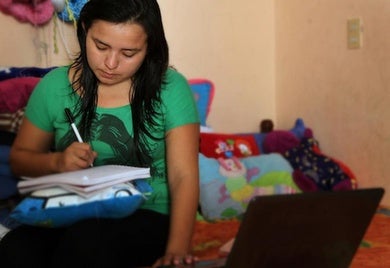
MOOCs: The region's next big thing?
What do massive open online courses (MOOCs) have to do with private sector development in Latin America and the Caribbean? The concept is to create fee and open content for students to reach scale and allow access, impacting not just the students in a physical classroom but thousands of students who participate via the internet. MOOCs enable people interested in learning to take a course online on their own time to learn about an interesting topic, develop a new skill for work or learn how to deal with a new problem. Students can also take courses from accredited schools around the world.

Eight ways women can lead with passion
I have to be honest. Until very recently, the words “leadership” and “passion” were not part of my generation’s lexicon. Having to use them together in a sentence, I for one was flat out uncomfortable. Thanks to conversations about "leaning in," the "quest for perfection" and "why women still can't have it all," a dialogue was started - albeit at a bit of a distance from Latin American and the Caribbean professionals. At the IDB headquarters in Washington, DC, the Vice Presidency for the Private Sector sought to bring that dialogue closer to home. Over a hundred colleagues and I attended a conversation with Inez Murray, CEO of the Global Banking Alliance for Women. The personal insights shared left staff smiling, debating and, most importantly, reflecting.
-
Sharing is caring: Two solutions for more sustainable living
Have you ever considered how much you use your most valuable items? A personal automobile, for example, is only used five percent of the time – even less in urban areas. Fortunately, private and public sector actors are realizing how little we use individual items and proposing unique ways to be a bit more utilitarian, environmentally-conscious and community-oriented. The key is sharing.
-
Three Assumptions You Should Avoid When Working with the BoP
“I like working in something I love, where I receive compliments and I manage my own time,” said Carlos, a 43-year old man, father of two, who earns less than U$360 per month. He was one of the 10 men and women we gathered in Villa El Salvador in Lima, Peru, for a focus group on the consumption preferences of low-income people. His response to the question about the advantages of a formal, stable job made me realize people and organizations (me included) working with those at the base of the pyramid (BoP) tend to make subtle assumptions about this segment of the population – assumptions that impact the effectiveness of our projects to benefit this population.

What can Latin American countries learn from Korea in energy efficiency?
*By Narae Lee If you dig a hole through the center of the Earth, starting from Montevideo in Uruguay, you would get to Seoul, the capital of South Korea. Korea and Uruguay are the antipodes, meaning that they are diametrically opposite to each other. Korea is indeed one of the farthest countries from Latin America, seemingly not having many things in common with the region either. However, the Asian tiger has recently increased its visibility on the other end of the planet through Korean companies and celebrities in mass culture and sports, but most importantly by sharing its development experience.
