
Smart wires for the energy transition
For the last two decades, there has been a boost in renewable energies in our region, initially led by Brazil, Chile and Mexico, which benefited from economies of scale when renewable energy generation costs went down and followed later by many other countries.

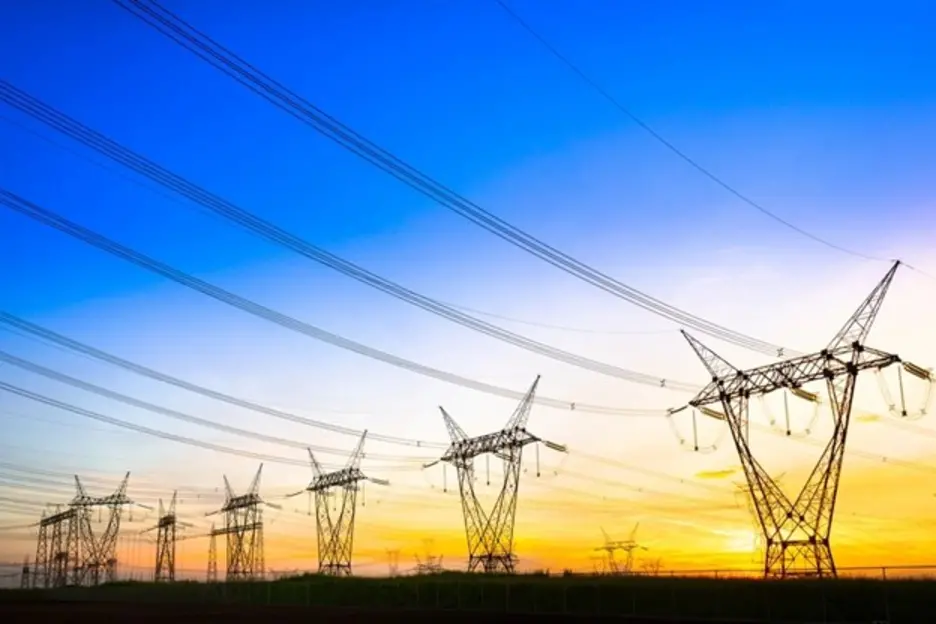
Wind energy capacity increased almost 17 times between 2011 and 2020. Solar was even more extreme, growing more than 1300 times during this period[1]. As a result of this revolution, in 2021 solar and wind covered 11% of total electricity demand in the region.
In Uruguay for example, the energy matrix accounted for just 0.2MW of solar and wind in 2007. In 2022, it exceeded 1800MW and supplied 36% of the national demand, an exceptional case of a rapid transition.
But there is a lack of adequate transmission infrastructure to transport this new generation. According to the International Energy Agency, investments in renewables have doubled since 2010, reaching almost $600 billion by 2022. Still, global investment in grids remained at around $300 billion annually during the last five years. Just to meet national climate targets at the global level by 2030, grid investments must double to $600 billion yearly. In Latin America, investments should triple by 2030 or increase more than six times by 2050.
The lack of transmission infrastructure results in bottlenecks and energy restrictions. Furthermore, in the so-called nodal electricity markets (with tariffs based on the place of generation), lack of transmission causes prices to reach zero at certain nodes due to system saturation, leaving generators in financial hardship. This is common in northern Chile, but also Argentina, Panama, and other countries.
Energy without borders
The IDB Group pursues three key lines of action to leverage the pivotal role of transmission in the region's energy transition:
- Financing transmission infrastructure, with speed and scale, at the national and regional level.
- Capturing the contribution of the transmission assets to decarbonization with analytical tools.
- Optimizing the existing transmission networks' performance with innovative technologies.
Firstly, from the financing side., in the last two decades, the public sector of IDB invested over $3 billion in national and regional grid initiatives. These include a $$1.14 billion loan for Argentina to support the decarbonization of its energy sector, build transmission networks, and enhance the integration of more solar and wind energy.
IDB also lent $260 million to Paraguay to support the National Development Plan by expanding the electricity transmission system and providing measures to ensure its resilience.
Furthermore, there has been a significant play to support regional interconnection, with a $125 million loan to support the expansion of interconnection capacity between Peru and Ecuador. This public-private partnership (PPP) scheme includes public financing by IDB and EIB for the Ecuadorian section, while the Peruvian section will need non-sovereign guarantee financing (which IDB Invest is analyzing). This is a valuable example of the impact the IDB Group could generate from the coordinated action of its public and private sides.
In the private sector, IDB Invest has supported the development of transmission lines, with total funding of $500 million, and 680 km of lines, especially in Uruguay (Melo-Tacuarembó, Tacuarembó-Salto, and Cardal-Punta del Tigre) to expand and provide reliability to the transmission grid while transporting more renewable energy.
IDB Invest is also structuring a brownfield transmission line in Colombia and chasing further regional interconnection in Panama-Colombia with our public sector.
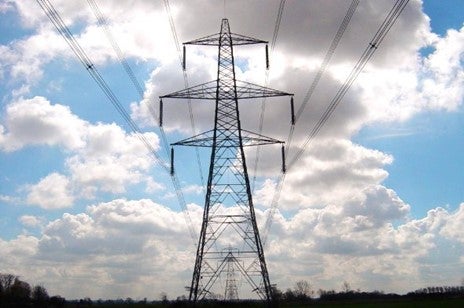
Photo: Melo-Tacuarembo Transmission Line in Uruguay, financed by IDB Invest and BBVA
To keep pace with the increase in generation, there is a need to continue developing transmission PPPs and strengthen executing entities, to specifically expedite permitting, community consultation and land rights , to assure the successful completion of the assets. Speed is of the essence at this point.
Secondly, focusing on quantification of impact, IDB Invest developed an analytical tool to determine the contribution of the transmission assets to decarbonization. The Green Transmission Line Certificate measures, among other many aspects, that the transmission line transports a majority of renewable energy, to establish whether the transmission line constructed is “green”.
Activated three years ago, the certificate is available to developers and was first awarded to the Tacuarembó-Salto transmission line in Uruguay. We expect this asset-based certificate to catalyze more impact investment towards transmission.
Related reading
- Green Transmission Lines: Key Asset for the Development of Renewables in the Region
- Latin America and the Caribbean strengthens its leadership in renewables worldwide in the critical decade of climate change through the RELAC initiative
Thirdly, IDB Group supports new technologies to optimize the existing transmission assets and increase capacity. This is crucial for energy transition, making existing assets perform optimally while other new lines enter the grid. This represents a clear quick win in the process of catching up on transmission infrastructure.
Some of these technologies have been around for a long time, but thanks to recent advances in digitalization and artificial intelligence, their use has become more widespread. Under the generic name of Grid Enhancing Technologies (or GETs)[2], these technologies are cost-efficient in solving grid bottlenecks, shortening interconnection timelines, deferring costly upgrades, reducing curtailment, increasing system reliability and integrating more renewable energy into the system. This also potentially benefits end users with cheaper electricity rates.
Worldwide, GET projects show improvements of 30-50% in the transmission capacity of existing lines. Simply by monitoring climatic variables (like temperature) in real-time, or electric variables from the grid that were assumed to be constant or very conservative in the design of the lines, there are differences that can facilitate significantly higher electricity flows.
Another attractive option to rapidly expand transmission capacity is to replace the existing steel-core conductors with advanced conductors which have a smaller, stronger composite core, able to transmit twice the power.
In collaboration with cutting-edge technological companies, IDB Invest is looking into initiatives in Colombia, Uruguay and Ecuador to apply these new technologies to the existing grid and specific projects to improve performance and lower maintenance costs.
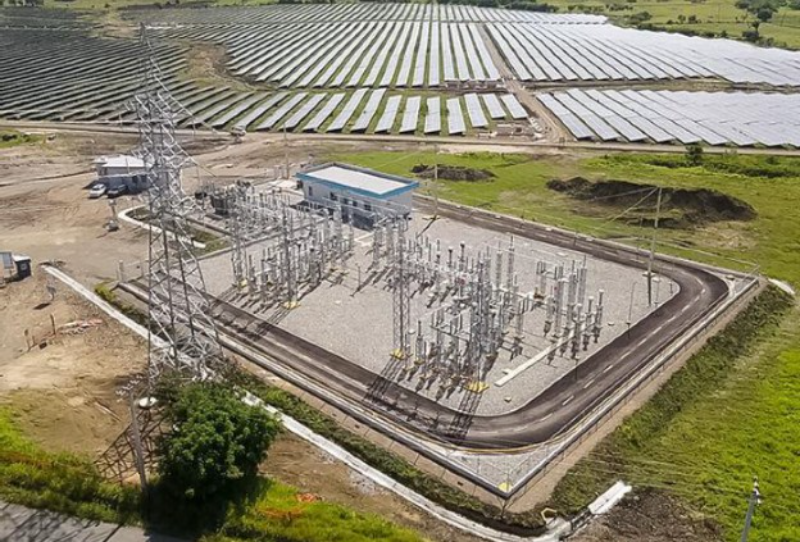
Photo: GET projects show improvements of 30-50% in the transmission capacity of existing lines.
Looking for Development Partners
Latin America and the Caribbean needs a more extensive and efficient transmission infrastructure to accelerate its ambitious transition plan. Our comprehensive approach ranges from public dialogue on regulation, upstream work on bankable models based on successful examples, to the provision of sustainable instruments by the private sector to finance the expansion of transmission infrastructure and incentivize greater efficiency in the existing grid.
We are constantly looking for development partners to walk this path together and achieve this much needed transition.
Latest blogs
- The Technologies that will turn Latin America and the Caribbean into a Global Hub for Sustainable Energies
- Want Global Solutions on Climate? Look at Latin America and the Caribbean
[1] Bloomberg New Energy Finance.
[2]It is true that GETs in general have been implemented worldwide, but the most advanced and sophisticated technologies have been deployed in Chile and Peru. It is worthwhile mentioning that Latin America and the Caribbean is in the vanguard of these technologies.
Authors

Rafael Matas
RAFAEL MATAS TRILLO is presently Head of the Andean Region and Energy Sector Lead, in the Infrastructure and Energy Division of IDB Invest, based at IDB Invest’s head-office. He has been working for the IDB Group since 2007, leading the development of transportation, renewable energy, transmission and water and sanitation transactions in Latin-America.
As Head of the Andean Region since 2020, Mr. Matas leads a team that has structured and financed paramount transactions such as Lima Airport, the Rumichaca-Pasto and Pamplona-Cucuta 4G toll-roads through social bonds, the first solar PV project finance transactions in Colombia, and the largest wind projects in Peru to date with Engie and Enel, among others.
He is presently also the Energy Sector Lead of IDB Invest, where he leverages on the experience and knowledge of the energy markets, obtained throughout the last 17 years helping countries to develop its PPA frameworks (such as Uruguay or the Dominican Republic), structuring numerous solar, wind and green transmission transactions (in Dominican Republic, Uruguay, Argentina, Chile, Brazil and Colombia), and designing innovative products such as the first Total Credit Guarantee from the IDB Group to wrap a debenture of infrastructure to finance a wind transaction in Brazil, or the IDB Invest Green Transmission Line Certificate.
A Spanish national, he has received awards for innovative project finance execution. Previous to the IDB Group, Mr. Matas worked for the Spanish bank Banco Bilbao Vizcaya Argentaria (BBVA) in its Hong Kong office for two years, managing the Spanish desk of the BBVA in China, and mainly devoting to corporate finance transactions.
He has a Law Degree and LLM by ESADE (Spain) and a Master in Foreign Service by Georgetown University.

Juan Roberto Paredes
Juan Roberto Paredes is a Senior Renewable Energy Specialist at the Energy Division of the Infrastructure and Environment Department at the Interamerican Development Bank, the largest provider of multilateral finance in Latin America and the Caribbean. Throughout his career he has advised several governments, energy regulators and public utilities in the region on topics such as grid integration of variable renewable energies, smart grids, electric mobility and regional electricity integration. Prior to his role at the IDB, he had the opportunity to work for private sector consultancies and clean energy developers in Germany and the UK, gaining extensive experience by assessing more than 1GW of wind and solar projects. Mr. Paredes has B.Sc. degrees in in Mechanical Engineering and Physics from the University of Los Andes in Bogotá, Colombia, and a M.Sc. degree in Renewable Energies from Oldenburg University in Germany. He also has executive program degrees in Infrastructure from the Kennedy School of Government at Harvard University, Energy and Climate Change from the Massachusetts Institute of Technology (MIT) and Energy Innovation and Emerging Technologies from Stanford University.
LIKE WHAT YOU JUST READ?
Subscribe to our mailing list to stay informed on the latest IDB Invest news, blog posts, upcoming events, and to learn more about specific areas of interest.
SubscribeDevelopment Impact
Related Posts

WE Finance Code Colombia: Data and Partnerships to Expand Financing for Women-Led Businesses
Financial sector stakeholders across Colombia are joining forces to expand women entrepreneurs’ access to credit through data, collaboration, and financial solutions tailored to their needs.

Sustainability Week 2026: Choose Your Free Sessions on business innovation and entrepreneurship
Business and knowledge come together at Sustainability Week 2026. Discover our virtual sessions on business innovation and entrepreneurship. Register today.

Corporate Governance: Practical Sessions, from Family Business to AI Oversight
Strong governance is the bridge between business strategy and tangible results. At Sustainability Week 2026 in Barbados, join free training sessions on family governance, AI oversight, and SOE continuity, available online on May 25.