How Big Data Is Changing Big Business

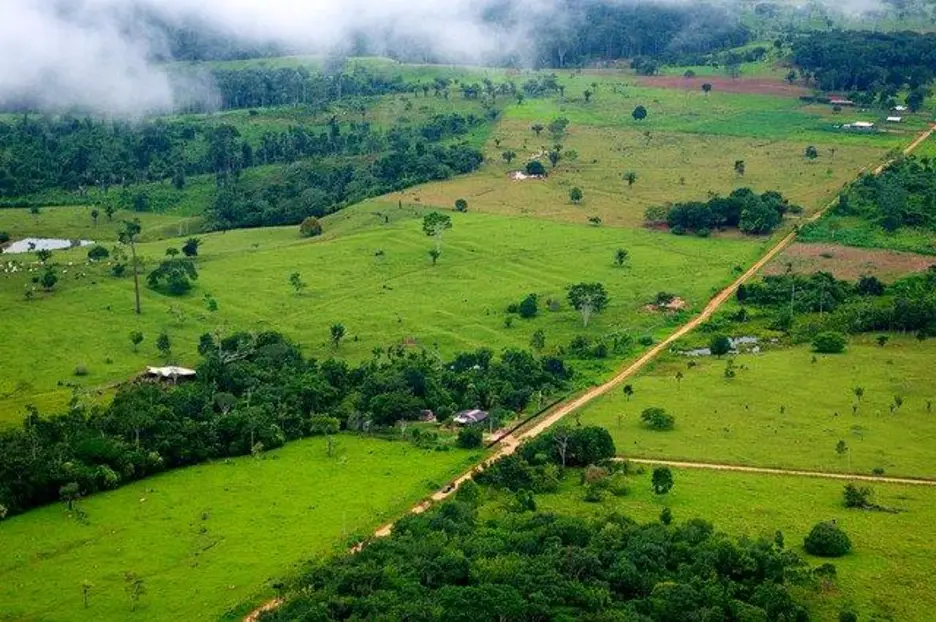
 Deforestation is just one issue where big data is providing companies with more information about their environmental impact. Data service providers can also help companies become sustainable businesses by providing information about their carbon and water footprints.

Because of pressure from NGOs, a growing recognition of the link between deforestation and climate change, and a desire to become more sustainable, a number of companies have recently made commitments to reduce deforestation in their supply chains. Unilever, for example, announced that it would purchase soy, meat, palm oil, and pulp and paper from only sustainable sources. Cargill, one of the largest global agribusiness companies, committed to not buying palm oil from sources that cause deforestation. Although deforestation linked to palm oil production has traditionally been located in Southeast Asia, the crop is growing quickly in Latin America. Unilever’s, Cargill’s, and other companies’ commitments are key to slowing environmental degradation in our region.
Following through on a zero-deforestation commitment, however, can be surprisingly challenging because of the complexity of supply chains. In coffee, for example, before a bean grown by a Nicaraguan farmer ends up in your Starbucks cup, it passes through the hands of many cooperatives, traders, manufacturers, roasters, wholesalers, and more. Traceability is a challenge for most agribusinesses.
Fortunately, the availability of big data is making that process easier for companies. A new tool developed by the World Resources Institute, Global Forests Watch, is using data provided by the University of Maryland, NASA, and other sources to visualize deforestation.
If a company has information about where their suppliers are located, they could use Global Forests Watch to monitor deforestation. Let’s explore a hypothetical company that has a supplier in Western Paraguay. In the map below, the green area was forested in 2000. The lighter green box represents the land owned by the supplier, which was also forested.

Here is the same area in 2013:

The purple areas represent land that was deforested between 2001-2013. As you can see, of the 27,322 hectares in the fictional plot, more than 11,000 hectares were deforested between 2001 and 2013. For any company that has a no-deforestation pledge, this supplier should be off limits.
A common cliché in the business world is: “if you can’t measure it, you can’t manage it.” This maxim certainly applies to companies’ sustainability efforts, where the lack of data and information has kept companies in the dark about how their business was connected with the environment. Now, with tools like Global Forests Watch, the private sector should be able to better understand and eventually manage their environmental impact.
Escrito por

Duncan Gromko
Duncan Gromko es un experto en inversiones y gestión inteligente de terrenos que trabajó en el Grupo BID hasta 2016 en los sectores de agronegocios e inversiones en temas relacionados. Fue analista en biodiversidad brindando asesoría a clientes en decisiones responsables con el medioambiente. Además de su experiencia en América Latina y el Caribe, cuenta con extensa experiencia en Asia; obtuvo su maestría en economía del medioambiente y políticia en la facultad SAIS de la Universidad Johns Hopkins de Estados Unidos.
¿TE GUSTA LO QUE ACABAS DE LEER?
Suscríbase a nuestra newsletter para mantenerse informado sobre las últimas noticias de BID Invest, publicaciones de blog, próximos eventos y para obtener más información sobre áreas específicas de interés.
SuscribirseFinancial Institutions
Posts Relacionados

Gobernanza y sucesión: asegurando el futuro de las instituciones financieras no bancarias de México
Estudio de BID Invest: hallazgos clave y hoja de ruta para fortalecer la gobernanza y los planes de sucesión del CEO y altos directivos de las instituciones financieras no bancarias (IFNB).
Enfrentando la tormenta: cómo BID Invest apoya la resiliencia del sector privado en el Caribe
BID Invest y el Fondo Verde para el Clima ayudarán a las empresas del Caribe a enfrentar mejor los impactos climáticos futuros, mediante financiamiento combinado y asistencia técnica.

Reimaginando el futuro de las finanzas en América Latina y el Caribe
En el FinnLAC Forum 2025 en Miami, el Grupo BID reunió a más de 500 líderes y expertos del sector para ayudar a redefinir el futuro de las finanzas en América Latina y el Caribe. El evento se centró en mejorar la capacidad de las personas y las empresas para gestionar mejor sus finanzas, resistir choques económicos y planificar su prosperidad a largo plazo. Al destacar innovaciones que amplían el acceso, fortalecen la resiliencia y promueven la salud financiera, el foro sentó las bases para sistemas financieros más sostenibles en toda la región.