
What lessons does Brazil’s Independence have for sustainable business in Brazil?


[caption id="attachment_1818" align="alignleft" width="300"] Photo Credit: Creative Commons by Hugo Martins Oliveira[/caption]
Before Brazil became the world’s fifth largest country and seventh largest economy that it is today, nearly 200 years ago this month, it was struggling for freedom from Portugal. It remained a colony until 1808, when the Portuguese court, fleeing the Napoleonic forces in Portugal, left Lisbon and made Rio de Janeiro the capital of the Portuguese empire.
It’s important to acknowledge the significance the private sector of the time had in this pivotal moment in history. Once the Portuguese kingdom reached Brazilian soil, its ports were opened to foreign trade. The new established kingdom in Brazil, along with its agricultural producers and traders, enjoyed the economic benefits of having autonomy. When the ruling monarch returned to Portugal in 1821, he was never able to reinstitute Brazil as a colony again. The new economic freedoms from commerce made the local ruling class side with the Portuguese monarch’s son, Pedro I, declaring him the first Emperor of Brazil, who then declared Brazil independent from Portugal on September 7th, 1822.
Back then the private sector was crucial in attaining Brazil’s independence. Today the private sector has the opportunity to play a defining role in attaining development through sustainable business practices. Just last month the United Nations Global Compact hosted in Sao Paulo a consultation among the business community in Brazil to follow the 2000 – 2015 era of the Millennium Development Goals (MDGs). Organized in partnership with the UN Development Program (UNDP), the UN Industrial Development Organization (UNIDO) and the International Finance Corporation (IFC), representatives of various industries within the private sector voiced their views on how to successfully implement a new global development agenda, including among others the positioning of small- and medium enterprises (SMEs) to support the growth of capabilities, competitiveness and sustainability.
The potential for Brazilian SMEs to shape the post-MDG development agenda is great; yet there are many hurdles impeding their sustainable growth, particularly access to proper financing. A recent example can be seen in the realm of energy efficiency. Contax is a call center in Fortaleza that could not meet requirements for CO2 emission reductions and, as a result, paid monthly fines. APS Soluçoes is a small energy service company in Porto Alegre which supplies energy efficient lighting and air conditioning systems, but could not obtain short-term financing from local banks. With IDB’s Energy Efficiency Guarantee Mechanism (EEGM Mechanism), Banco Indusval & Partners (BI&P) was able to provide the financing to APS. APS then offered Contax monthly savings in their energy costs by renovating their lighting and air conditioning systems.
As we quickly approach the 2015 MDG deadline, it’s important to study examples such as the Contax-APS Soluçoes-Banco Indusval partnership. Innovative approaches such as this one can very well shape and even define the development agenda moving forward.
Escrito por

Cassia Peralta
Cassia Peralta es consultora independiente de MBA y se desempeñó como oficial de inversión de BID Invest hasta mayo de 2017. Su trabajo se centraba
¿TE GUSTA LO QUE ACABAS DE LEER?
Suscríbase a nuestra newsletter para mantenerse informado sobre las últimas noticias de BID Invest, publicaciones de blog, próximos eventos y para obtener más información sobre áreas específicas de interés.
SuscribirseFinancial Institutions
Posts Relacionados
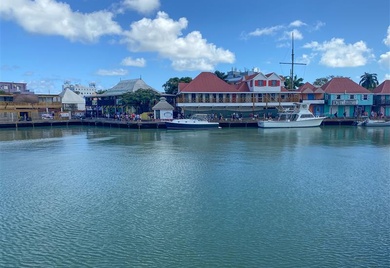
Enfrentando la tormenta: cómo BID Invest apoya la resiliencia del sector privado en el Caribe
BID Invest y el Fondo Verde para el Clima ayudarán a las empresas del Caribe a enfrentar mejor los impactos climáticos futuros, mediante financiamiento combinado y asistencia técnica.

Reimaginando el futuro de las finanzas en América Latina y el Caribe
En el FinnLAC Forum 2025 en Miami, el Grupo BID reunió a más de 500 líderes y expertos del sector para ayudar a redefinir el futuro de las finanzas en América Latina y el Caribe. El evento se centró en mejorar la capacidad de las personas y las empresas para gestionar mejor sus finanzas, resistir choques económicos y planificar su prosperidad a largo plazo. Al destacar innovaciones que amplían el acceso, fortalecen la resiliencia y promueven la salud financiera, el foro sentó las bases para sistemas financieros más sostenibles en toda la región.

Cuatro razones que hacen de la transparencia un activo estratégico para las instituciones financieras de desarrollo
El acceso abierto a la información genera credibilidad, mejora resultados, fomenta la colaboración y atrae inversiones. No es solo un valor, es una piedra angular para el progreso a largo plazo en medio de complejos desafíos financieros y operativos.